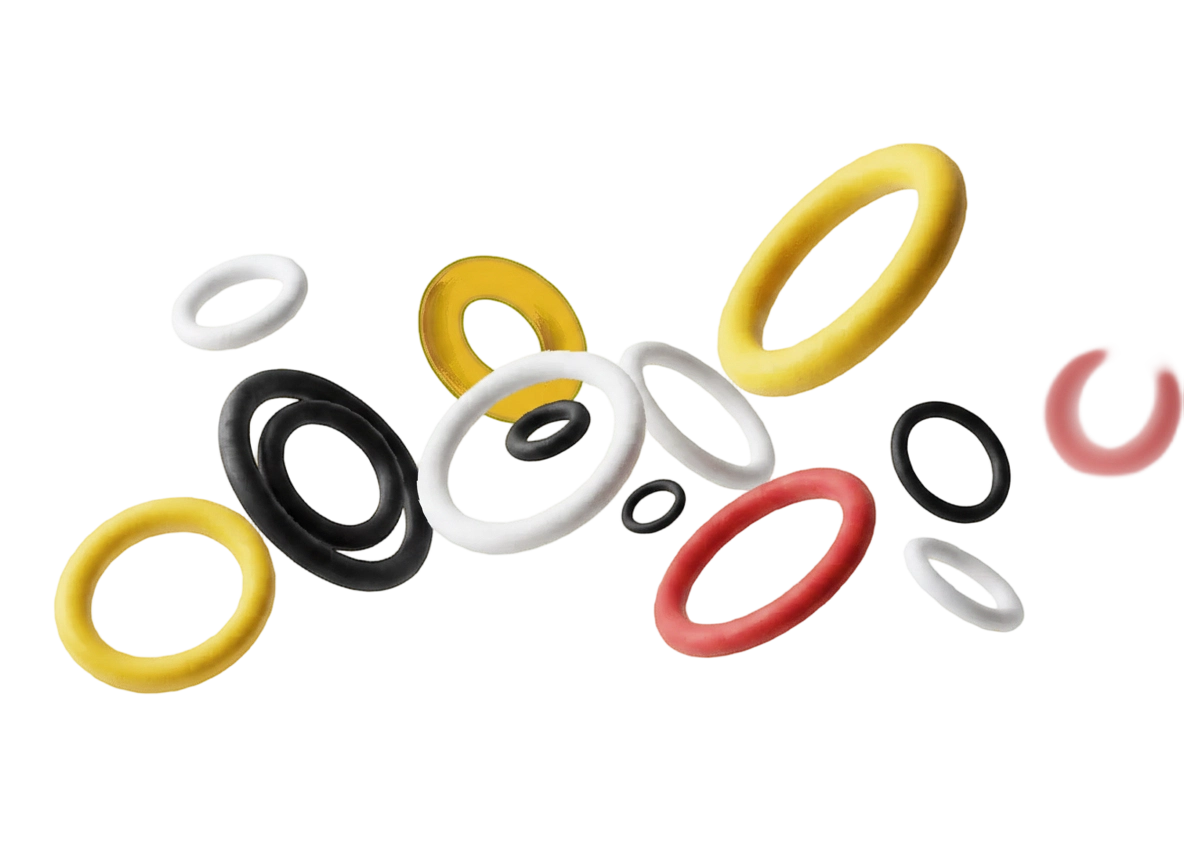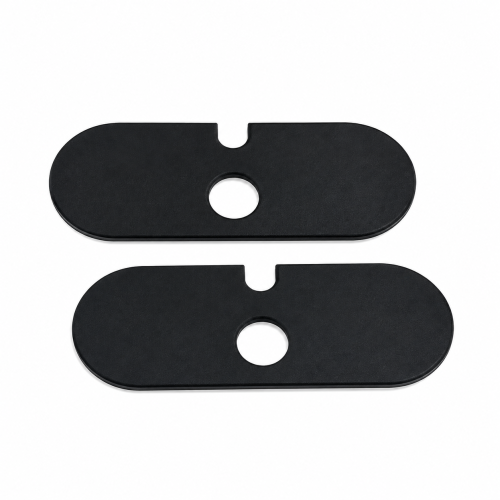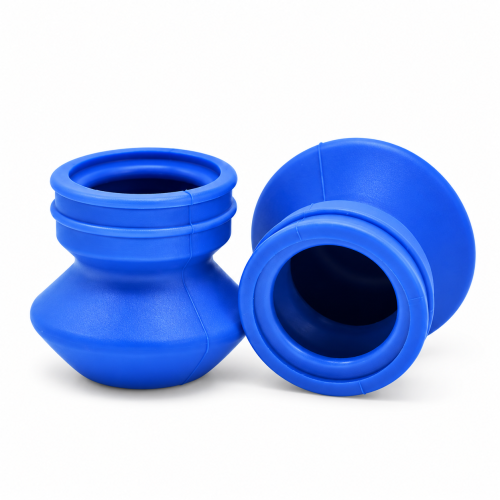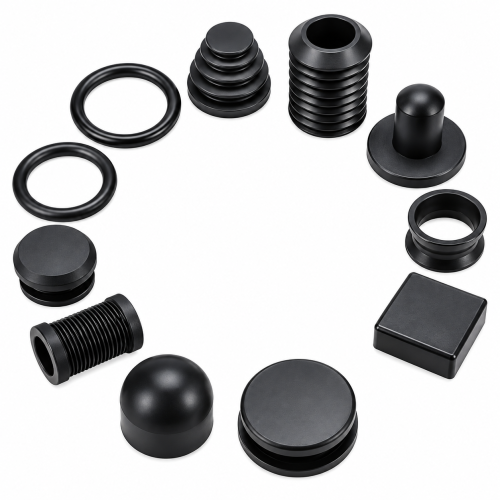
A rubber gasket closes the microscopic gap left between two rigid surfaces once they’re bolted or clamped together, and which rubber compound you choose determines whether that seal holds for years or fails in months. The mechanism sounds simple — squeeze a soft material between two hard ones — but the material, the durometer, and the amount of compression a joint allows all have to line up, or the gasket leaks regardless of how well it was cut or molded.
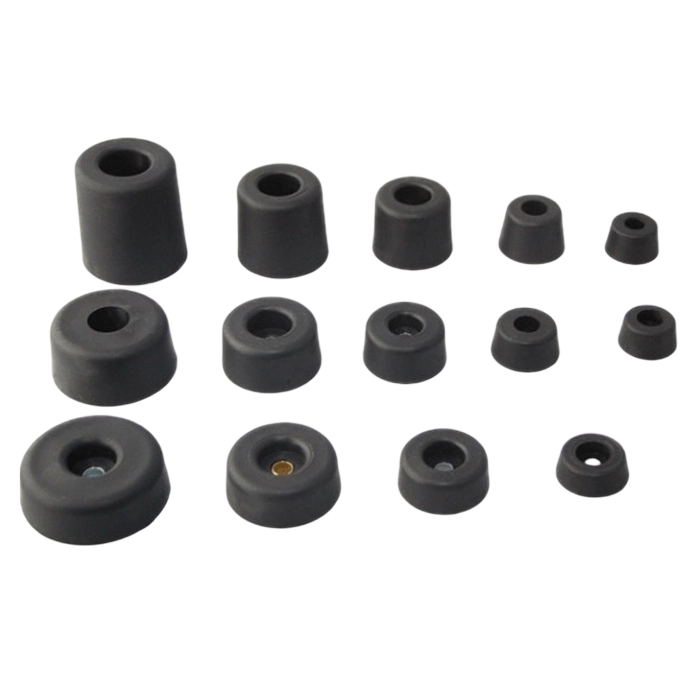
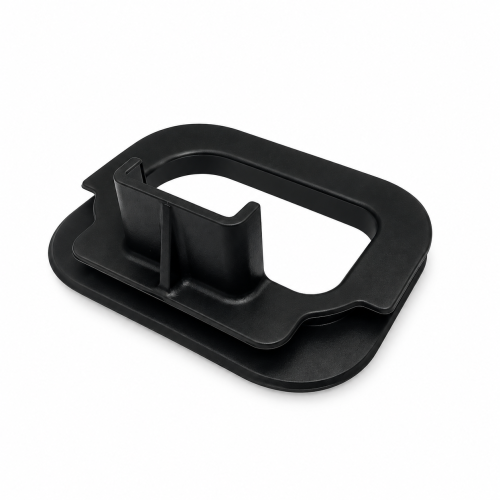
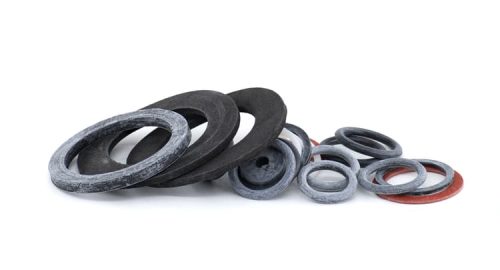
A rubber gasket is a molded or cut elastomeric part placed between two mating surfaces — flanges, covers, housings, flat joints — to close the microscopic gaps left by machining tolerances and surface roughness. When the two surfaces are bolted or clamped together, the gasket is compressed and pushed into those irregularities, blocking the path a liquid, gas, or contaminant would otherwise take.
What makes rubber uniquely suited to this job, compared to metal or fiber gasket materials, is elastomeric recovery: rubber can be compressed well beyond its resting thickness and spring back toward its original shape without permanent damage. That stretch-and-recover behavior lets a rubber gasket keep sealing even as bolts loosen slightly, surfaces expand and contract with temperature, or vibration works the joint over time — none of which a rigid metal gasket can do without re-torquing or outright replacement. Rubber is also generally cheaper to form into shape and easier to customize into odd geometries than metal or PTFE, which is why it dominates low-to-moderate pressure sealing across automotive, appliance, plumbing, and general industrial equipment.
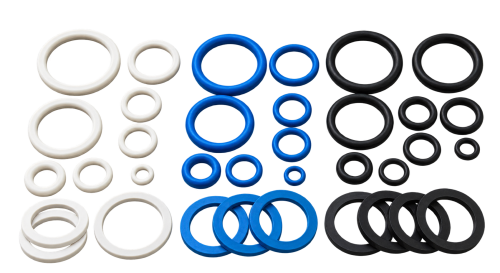
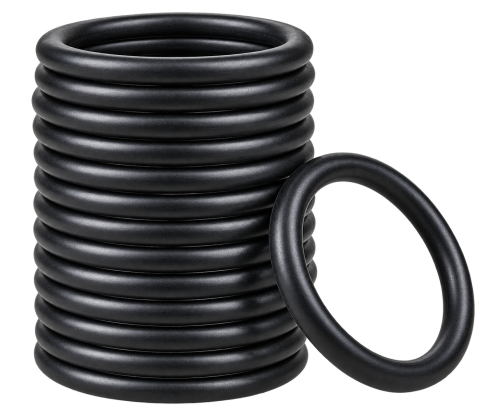
Gaskets differ from O-rings and other dynamic seals mainly in geometry and joint type: a gasket is typically a flat or shaped ring sealing two static surfaces clamped face-to-face, while an O-ring seals a round groove and can handle rotating or reciprocating motion in some designs. Both rely on the same underlying elastomer behavior, but gasket joints are almost always static.
“Rubber and Gasket Company of America” is the name of a US industrial distributor, not a type of gasket; it is unrelated to Hongjie Sealing Technology.
Distributors under names like this typically stock catalog-standard gasket materials in common sizes and pass along a markup on parts they don’t produce themselves. A direct manufacturer controls the compound formulation, mold tooling, and dimensional tolerance from raw rubber through the finished part — which matters once a gasket needs a documented material certification, a non-catalog thickness, or a bonded metal insert that a distributor would have to special-order rather than mold in-house. Material compatibility, durometer, and tolerance are what decide whether a specific gasket fits an application; the supplier’s name on the box doesn’t change any of that.
Sealing performance comes down to compression and conformity. When a flange or housing is tightened, the gasket material is squeezed between the two faces and forced to flow, to a degree, into scratches, pits, and flatness deviations that a rigid material would bridge but not fill. How much squeeze is needed, and how the gasket behaves under it, depends on two linked factors: the base rubber compound and its durometer — hardness measured on the Shore A scale.
Most gasket-grade rubber falls somewhere between 20 and 90 Shore A, depending on compound. Compounds at the softer end conform more readily to rough, warped, or lightly pitted surfaces and need less bolt torque to seal, but they resist extrusion under high pressure less well. Compounds toward the higher end hold their shape and resist blow-out at higher clamping loads and pressures, but they need flatter, cleaner mating surfaces to seal reliably, since they don’t flow into surface defects as easily.
The other number that matters over time is compression set — the percentage of original thickness a rubber fails to recover once a clamping load is removed. Tested under ASTM D395 Method B, typically after 22 hours at 70°C under 25% deflection, a gasket-grade compound intended for repeated thermal cycling or disassembly generally needs to stay under 20–30% compression set to keep sealing reliably. A compound with poor compression-set recovery will seal fine on day one but lose clamping contact — and start leaking — after a few heat cycles, even if the material itself was chemically appropriate for the job. This is why gasket selection is never just “pick a rubber type”: durometer, thickness, and the amount of compression the joint design allows all have to be matched to the compound for the seal to hold over the long run, not just at first assembly.
Most rubber gaskets are made from one of a handful of elastomer families, each with a different balance of temperature range, chemical resistance, and cost.
| Material | Typical Shore A | Temperature Range | Best for | Avoid when |
|---|---|---|---|---|
| NBR / Nitrile | 40–90 | −40°C to +120°C | Oil, fuel, and mineral hydrocarbon exposure; automotive and hydraulic housings | Outdoor UV/ozone exposure, or strong ketone/ester solvents |
| EPDM | 30–90 | −50°C to +150°C | Water, steam, weathering, HVAC, outdoor and washer/appliance seals | Any exposure to petroleum oils or fuels — EPDM swells and degrades |
| Silicone (VMQ) | 20–80 | −60°C to +230°C | Food/medical contact, wide temperature swings, electrical enclosures | High mechanical load or abrasion — silicone tears and cuts easily |
| Neoprene (CR) | 40–90 | −40°C to +120°C | General-purpose weatherproofing, moderate oil/chemical exposure, moderate cold flexibility | Strong acids, aromatic fuels, or continuous high heat |
| FKM / Viton | 60–90 | −20°C to +200°C | Aggressive chemicals, fuels, and high continuous heat | Budget-sensitive, low-severity applications — FKM costs several times more than NBR |
| Natural rubber | 30–90 | −50°C to +80°C | High resilience, abrasion resistance, mechanical/vibration parts | Oil, fuel, ozone, or sunlight exposure |
| SBR | 40–90 | −40°C to +100°C | Low-cost general sealing, non-oil-contact water and air lines | Any oil, fuel, or strong chemical contact |
| Butyl | 40–90 | −40°C to +120°C | Gas impermeability, vacuum service, some acid resistance | Petroleum-based fluids and most solvents |
NBR remains the default choice for anything touching lubricating or fuel oils because its acrylonitrile content gives it strong hydrocarbon resistance, but that same chemistry makes it degrade under sustained UV and ozone exposure — a nitrile gasket left outdoors will crack and harden years before an EPDM equivalent would. EPDM runs the opposite way: excellent against water, steam, and weathering, but it swells and softens on contact with almost any petroleum-based fluid, so it’s the wrong choice anywhere near engine oil or hydraulic fluid.
Silicone earns its place in food, medical, and electrical enclosure gaskets mainly for its wide temperature tolerance and inertness rather than mechanical toughness — it tears more easily under abrasion or repeated flexing than NBR or neoprene, so it’s a poor fit for gaskets that see frequent disassembly or physical wear. Neoprene sits as a general-purpose middle ground: reasonable oil resistance, decent cold flexibility, and lower cost than FKM, which makes it common in HVAC and moderate-duty industrial gaskets where neither extreme chemical exposure nor extreme heat is expected.
Beyond material, gaskets split into three basic design categories: sheet/flat gaskets, cut from rolled or cured rubber sheet into a shape or ring; molded gaskets, formed by compression or injection molding to a precise 3D profile with features like ribs, beads, or bonded metal carriers; and spiral-wound or composite gaskets, which combine a metal winding with a soft filler and are used mostly in high-pressure piping rather than general rubber sealing. Rubber gaskets specifically live almost entirely in the first two categories — flat die-cut shapes for simple flange joints, and molded profiles where geometry, a sealing bead location, or a bonded metal insert needs to be built into the part itself rather than cut from flat stock.
Rubber gaskets show up anywhere two rigid parts need to be joined without leaking, and the specific job shifts by industry.
Automotive. Cylinder head covers, oil pans, thermostat housings, and body seals rely on rubber gaskets to hold engine oil, coolant, and combustion byproducts inside their intended path while flexing with metal expansion under heat cycling. NBR handles most oil- and fuel-adjacent joints; silicone shows up where higher, more stable temperatures matter more than fuel resistance. Automotive door and body sealing relies on extruded and molded automotive rubber seals rather than flat gaskets for weatherstripping, vibration damping, and water intrusion control.
Plumbing and water systems. Faucet, valve, and pipe-joint gaskets sit directly in the water path, so material selection has to account for chlorinated water, temperature swings between hot and cold lines, and, for potable water lines, compliance requirements beyond generic chemical resistance. Faucet cartridges, valve seats, and other fitting-specific plumbing rubber parts pair EPDM and NBR gaskets with O-rings and washers depending on the fitting design.
HVAC and appliances. Washing machine door seals, dishwasher pump housings, and compressor gaskets deal with a mix of water, detergent, and vibration, often over thousands of open/close cycles. Durometer and compression-set recovery matter as much here as chemical resistance, since a gasket that hardens after repeated compression cycles will start leaking around the door seal well before the compound chemically fails. Washing machine drain pumps, dishwasher spray arms, and compressor mounts also depend on appliance-specific rubber parts beyond the door gasket itself.
Electrical enclosures. Cover gaskets on outdoor junction boxes, panel enclosures, and IP-rated housings need to block dust and water ingress while surviving years of UV and temperature cycling with minimal maintenance access. Silicone and EPDM dominate this category for exactly that reason. Panel cutouts and cable entries on the same enclosures typically need rubber grommets and gasket parts sized for electrical equipment, not just the cover gasket.
Industrial piping and flanges. Flat gaskets between pipe flanges, tank covers, and vessel access panels carry water, compressed air, or process fluids at moderate pressure, usually in NBR or EPDM depending on the media, with thickness and durometer chosen to match the flange’s bolt pattern and clamping force.
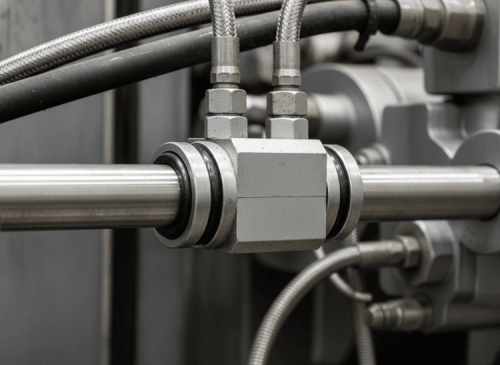
Die-cutting stamps or cuts a shape from rolled rubber sheet stock using a steel-rule or rotary die. It’s fast and inexpensive for flat, simple profiles and low-to-moderate volumes, but it’s limited to two-dimensional shapes cut from constant-thickness sheet — no ribs, bosses, or varying cross-sections.
Compression molding places a pre-measured charge of uncured rubber into a heated mold cavity and presses it into shape under pressure and heat. It handles moderate-to-high volumes efficiently and can produce three-dimensional features like sealing ribs or stepped thicknesses that die-cutting can’t, though cycle times run longer than injection molding for equivalent part counts.
Injection molding injects uncured rubber into a closed mold under pressure through a runner system, which suits complex geometries, tight dimensional tolerances, and higher-volume production runs where cycle-time efficiency matters. Tooling cost, cycle time, and achievable part complexity differ meaningfully between the two molding processes, as detailed in Injection vs Compression Molding for Rubber Parts.
Extrusion pushes uncured rubber continuously through a shaped die to form long profile lengths, then cures and cuts them to length. This method suits long gasket strips and channel profiles rather than closed, ring-shaped gaskets, and is the usual route for door and cabinet seal strips rather than flange gaskets.
Work through four questions before locking in a material choice:
O-ring material selection follows the same chemical-and-thermal matching logic covered in NBR vs FKM vs EPDM O-Rings: How to Choose, useful when a single assembly mixes gaskets and O-rings. If you’d rather talk through your temperature, media, and compression numbers directly, contact Hongjie’s sealing engineers before committing a spec to tooling.
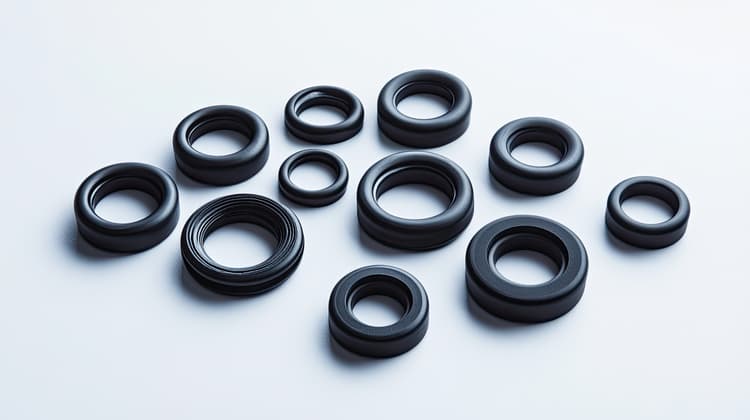
There are two real paths to sourcing a rubber gasket, and which one applies depends on whether your dimensions and material match something that already exists on a shelf.
Off-the-shelf sourcing. Hardware stores, plumbing suppliers, and industrial distributors stock standard flat gaskets and ring-style seals in common AS568 and metric sizes, in the handful of materials most repairs call for — usually NBR, EPDM, or generic rubber blends. This works well for replacement parts, standard flange sizes, and low-volume repair jobs where an approximate fit is acceptable and the exact compound isn’t critical to the application’s success.
OEM/custom-molded sourcing. Once a part needs a specific profile, a bonded metal insert, a compound not carried by a distributor, or documented FDA/NSF-compliant material for food or water contact, going directly to a manufacturer that molds or die-cuts to a drawing becomes the more reliable path. It’s also the more economical route once volume climbs past small repair quantities, since a direct factory relationship avoids an intermediate markup, and a manufacturer can hold tighter tolerances and document material compliance in ways a generic hardware-store gasket usually can’t. Drawing-to-mold production typically moves from a CAD file or physical sample through prototype approval before tooling begins, the workflow described on Custom Rubber Parts Manufacturer.
For the material types, sizing rules and typical uses of rubber washers in general, read Types of Rubber Washers: Materials, Sizing & Uses.
What are rubber gaskets used for?
Rubber gaskets seal the joint between two rigid surfaces — flanges, covers, housings — to stop liquids, gases, or contaminants from passing through. Common uses span automotive engine and body seals, plumbing and valve joints, HVAC and appliance housings, electrical enclosure covers, and industrial pipe flanges, with the specific compound chosen based on what the gasket contacts.
What are the three types of gaskets?
Gaskets generally fall into sheet/flat gaskets (cut from rubber sheet), molded gaskets (compression or injection molded into a 3D profile), and spiral-wound or composite gaskets (metal winding with a soft filler, used mostly in high-pressure piping). Rubber gaskets are almost always sheet or molded types; spiral-wound designs belong to the metal/composite category, not rubber.
Where can I buy a rubber gasket?
Standard sizes in common materials are available from hardware stores and industrial distributors for repairs and standard flange fittings. For a specific shape, compound, bonded-metal design, or higher production volume, sourcing directly from a molding manufacturer working from your drawing is the more cost-effective and precise route.
What can I use in place of a rubber gasket?
PTFE gaskets, cork-rubber composite gaskets, metal spiral-wound gaskets, or RTV liquid sealant can substitute for a rubber gasket depending on the trade-off you need — higher chemical resistance, lower cost, a higher pressure rating, or fitting an irregular joint — but each gives up some of rubber’s flexibility, recovery, or ease of replacement.
How long do rubber gaskets last?
Service life depends heavily on the compound, the compression it’s held under, and its exposure to heat, chemicals, and UV. A correctly matched compound under stable compression can last years in service, while an undersized or mismatched material can harden, crack, or lose sealing force within months.
Are rubber gaskets waterproof?
Yes, when the material and durometer are matched to the joint and the gasket is properly compressed, rubber gaskets block water effectively — that’s their primary job in plumbing and appliance sealing. A gasket that’s too hard, too thin, or under-compressed for the joint can still leak even in the right material.
Can rubber gaskets be custom made to a specific shape or size?
Yes. Beyond standard catalog sizes, gaskets can be die-cut or molded to a specific drawing, including bonded metal inserts, stepped profiles, or non-standard bolt patterns, using compression molding, injection molding, or extrusion depending on the shape and volume needed.
What’s the difference between a rubber gasket and a rubber seal?
A gasket is a specific type of seal placed between two static, bolted-together surfaces to close a flat joint, while the broader category of types of rubber seals also includes O-rings, lip seals, and dynamic seals against moving shafts.
Do rubber gaskets need adhesive to stay in place?
Not usually — bolt or clamp pressure holds most flange and housing gaskets in position during assembly. Adhesive or pressure-sensitive backing is sometimes added for die-cut gaskets on vertical or overhead surfaces, or where the joint is opened and closed frequently and the gasket needs to stay indexed during service.
Hongjie Sealing Technology has manufactured rubber sealing components since 2001 from an 11,000 m² facility in Shenzhen, running IATF 16949:2016 and ISO13485:2016-certified production. Its material range covers 200+ proprietary rubber compounds rated from –60°C to +325°C depending on compound, with resistance testing available against 500+ fluids, gases, and chemicals for non-standard media, dimensional precision down to ±0.02mm on smaller features, and functional prototypes deliverable in as little as 3–5 business days from a drawing.
For flange and housing gasket applications specifically, Molded Rubber Flange & Housing Gaskets covers standard and custom profiles built to those tolerances. If your project is EPDM-specific, the EPDM Gaskets Explained: The Complete Guide gaskets guide and Epdm Gaskets Cost: Prices & What Affects Them breakdown go deeper into that single material’s pricing and property range.
Whether you’re matching an existing flange size or starting from a blank drawing, the material, durometer, and tolerance choice made up front determines whether a gasket seals reliably or needs replacing within a year. Start a project discussion with Hongjie’s sealing engineers and get a material recommendation alongside your quote.


Our engineering team reviews your specs and responds within 24 hours with material recommendations and competitive pricing.