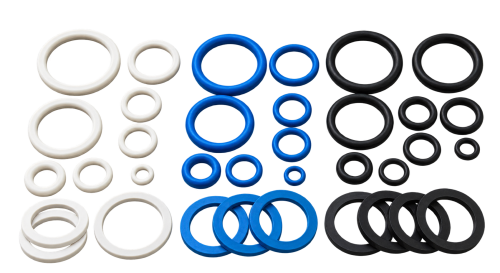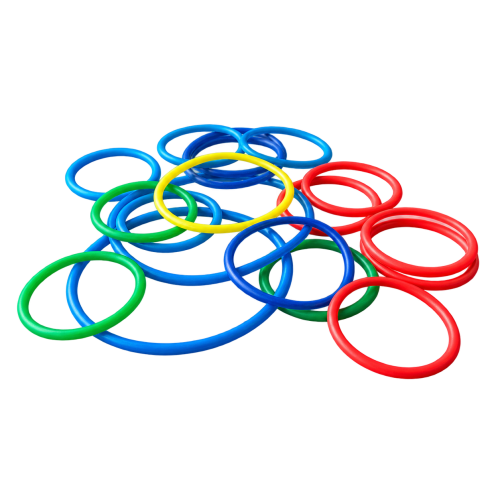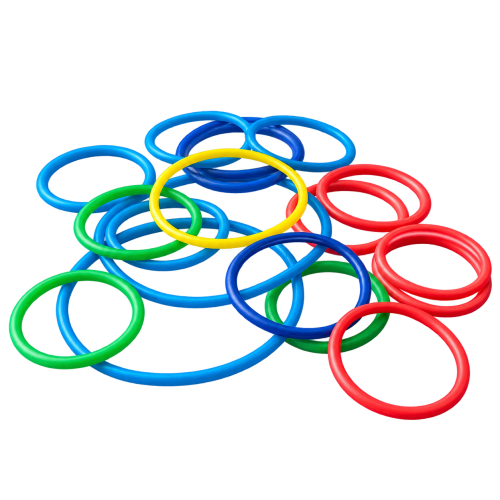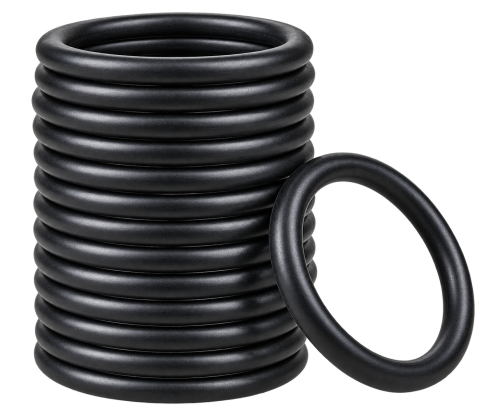

Custom-molded O-rings engineered to hold their seal in gasoline, diesel, biodiesel, and ethanol-blend fuel systems — sized to AS568A or metric, produced in the compound that actually matches your fuel chemistry. Send us your fuel type and drawing and we'll recommend a compound before you commit to tooling.

"Fuel resistant" isn't one material — it's a match between the rubber compound and whatever's flowing through the line. We mold four compounds commonly specified for fuel contact, each with a different real-world limit:
| Compound | Fuel/Media Fit | Trade-off |
|---|---|---|
| FKM (Viton) | Gasoline, diesel, biodiesel, aromatic fuel blends | Broadest fuel resistance and lowest gas permeation of the group; higher material cost |
| FVMQ (Fluorosilicone) | Fuel vapor, wide-temperature fuel systems | Strong vapor barrier but softer and less abrasion-resistant than FKM |
| HNBR | Diesel, biodiesel, oil-in-fuel environments | Good mechanical strength and moderate ethanol tolerance, but not as fuel-inert as FKM |
| NBR (Nitrile) | Straight gasoline or diesel only | Swells and softens in E10/E15 ethanol blends — don’t specify it where ethanol content is unknown or high |
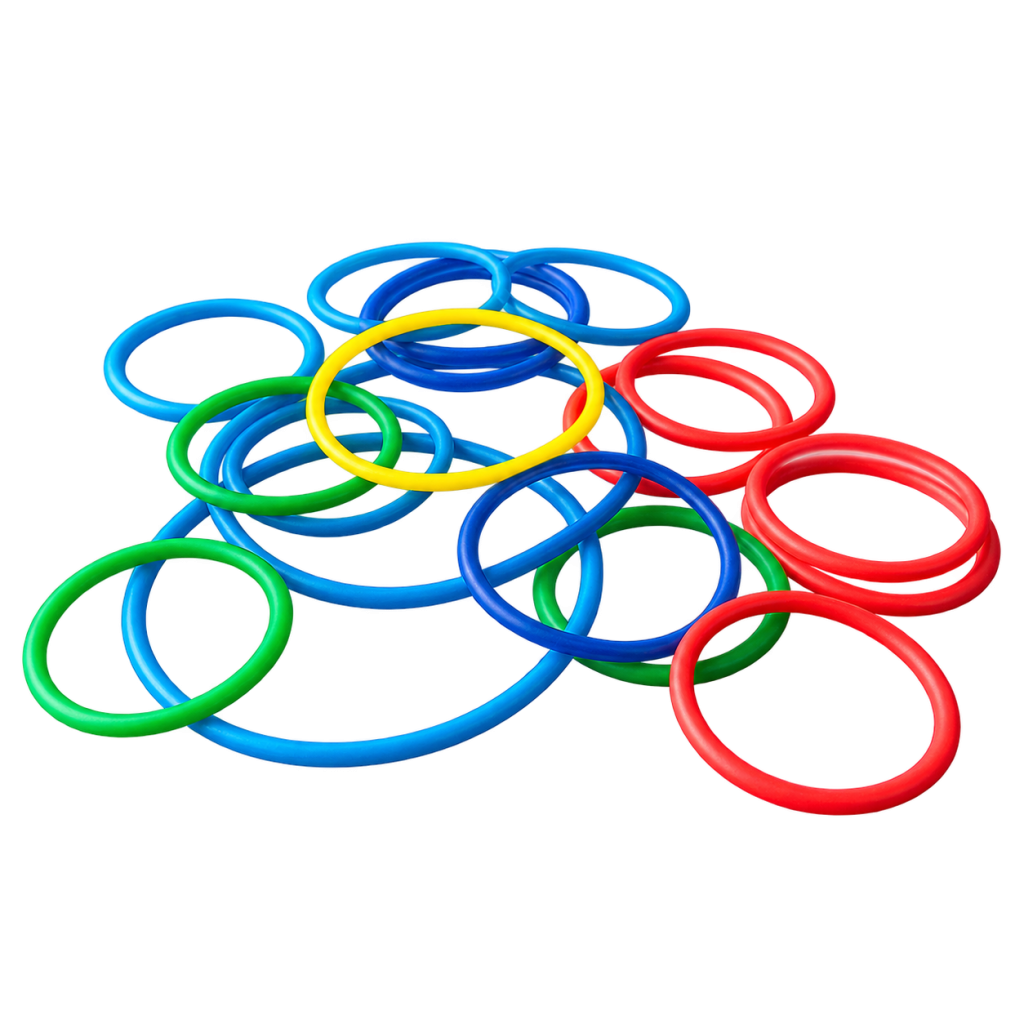
Fuel-contact O-rings are commonly specified at 60–90 Shore A, but the final hardness is matched to the groove design and sealing load rather than selected from one standard value. Across the compound range, formulations are rated from −60°C to +325°C; the actual upper limit depends on the selected fuel-resistant compound.
For a comparison of durometer, squeeze, temperature and cost, see our guide to choosing between NBR, FKM and EPDM O-rings. FKM O-rings are suited to fuel and vapor exposure where they outperform nitrile.
For non-ethanol fuel and oil applications, NBR O-rings remain a practical option when material cost is a priority.
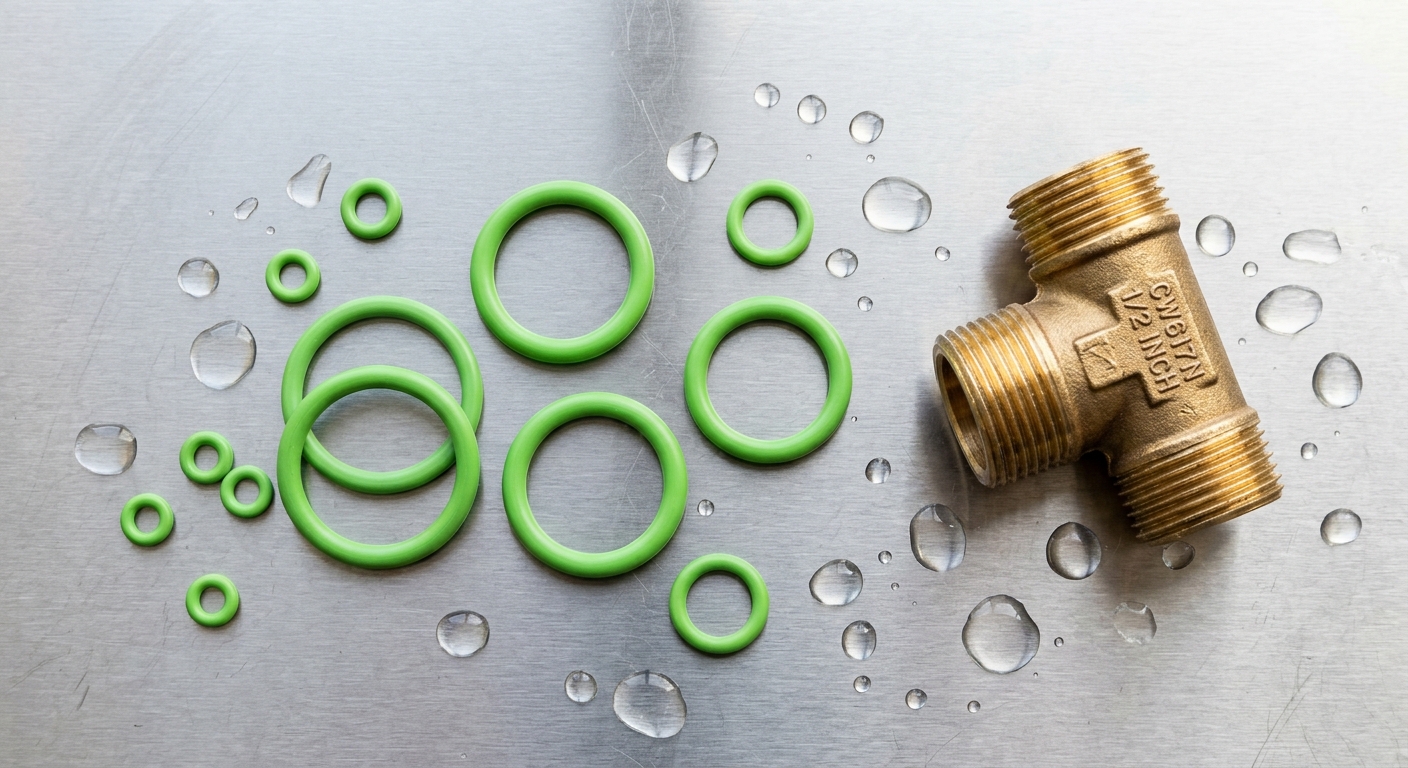
Fuel-resistant O-rings are used in fuel injection components, carburetor bowls and float assemblies, fuel pump housings, filler neck connections, small-engine and marine fuel systems, and industrial fuel storage or dispensing equipment.
Parts are molded to your drawing rather than selected from a fixed catalog SKU. Groove dimensions, hardness and compound can be adjusted to fit an existing housing, helping avoid a redesign around a standard part.
Parts are produced to AS568A dash sizes or metric dimensions, with two tolerance tiers depending on how tight the fit needs to be:
| Dimension Range | Standard Tolerance | Precision Tolerance |
|---|---|---|
| 0–10mm | ±0.10mm | ±0.02mm |
| 10–25mm | ±0.15mm | ±0.05mm |
| 25–50mm | ±0.20mm | ±0.08mm |
| 50–100mm | ±0.25mm | ±0.10mm |
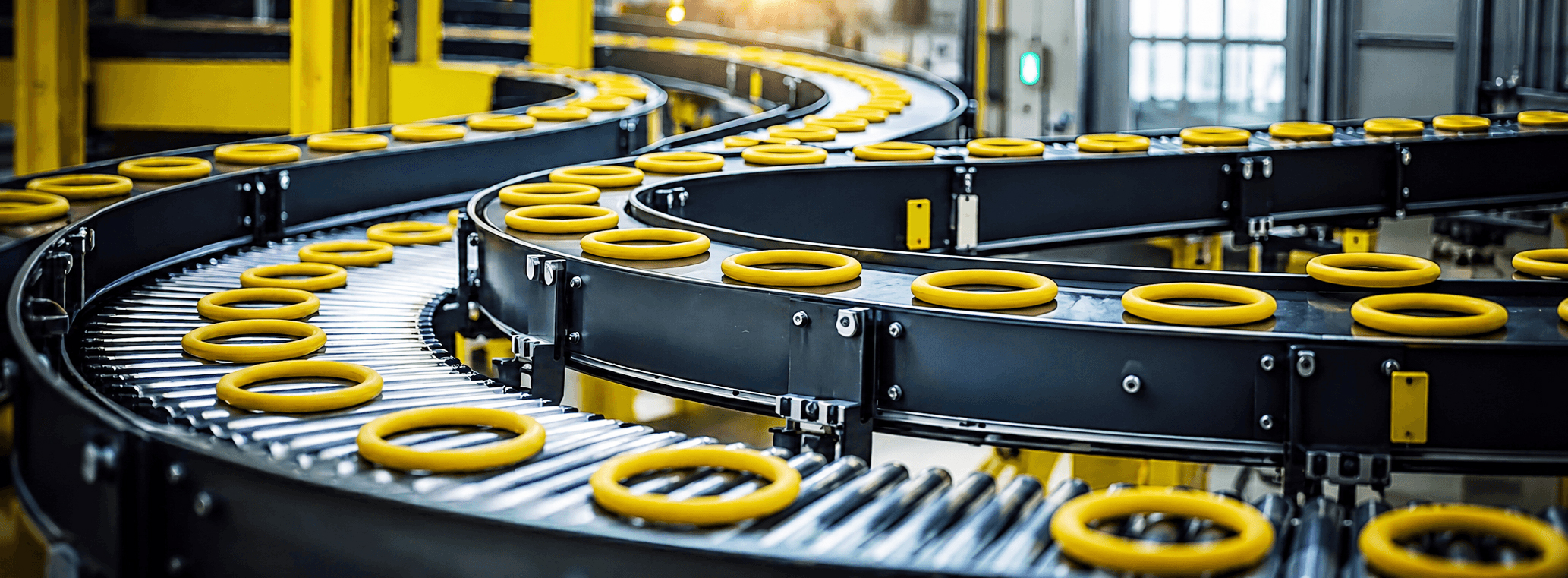
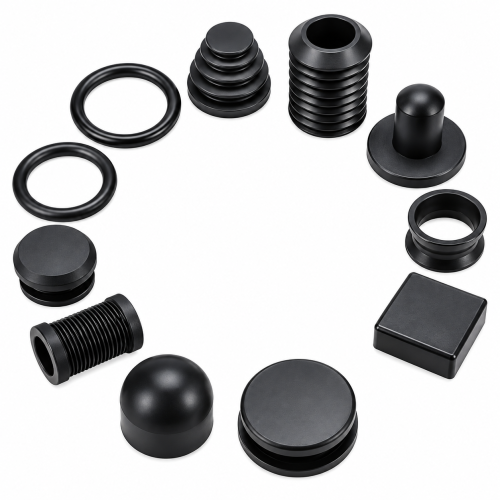
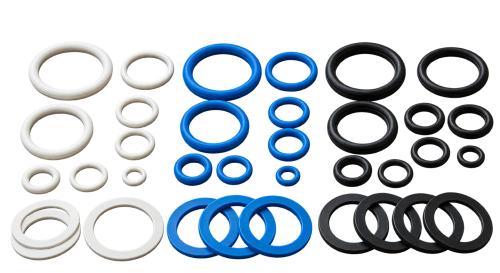
Beyond standard dash sizes, Hongjie molds O-rings with non-standard inside diameters, cross-sections and hardnesses using injection or compression molding.
Chemical compatibility is tested internally rather than assessed from published compound data alone. Custom colors, tracer stripes for compound identification and low-volume prototype runs use the same tooling infrastructure as production orders.
There is no fixed MOQ. Volumes are quoted after drawing review, from prototype batches through production runs, and the production schedule is confirmed at the same stage. Functional prototypes are typically ready within 3–5 business days.
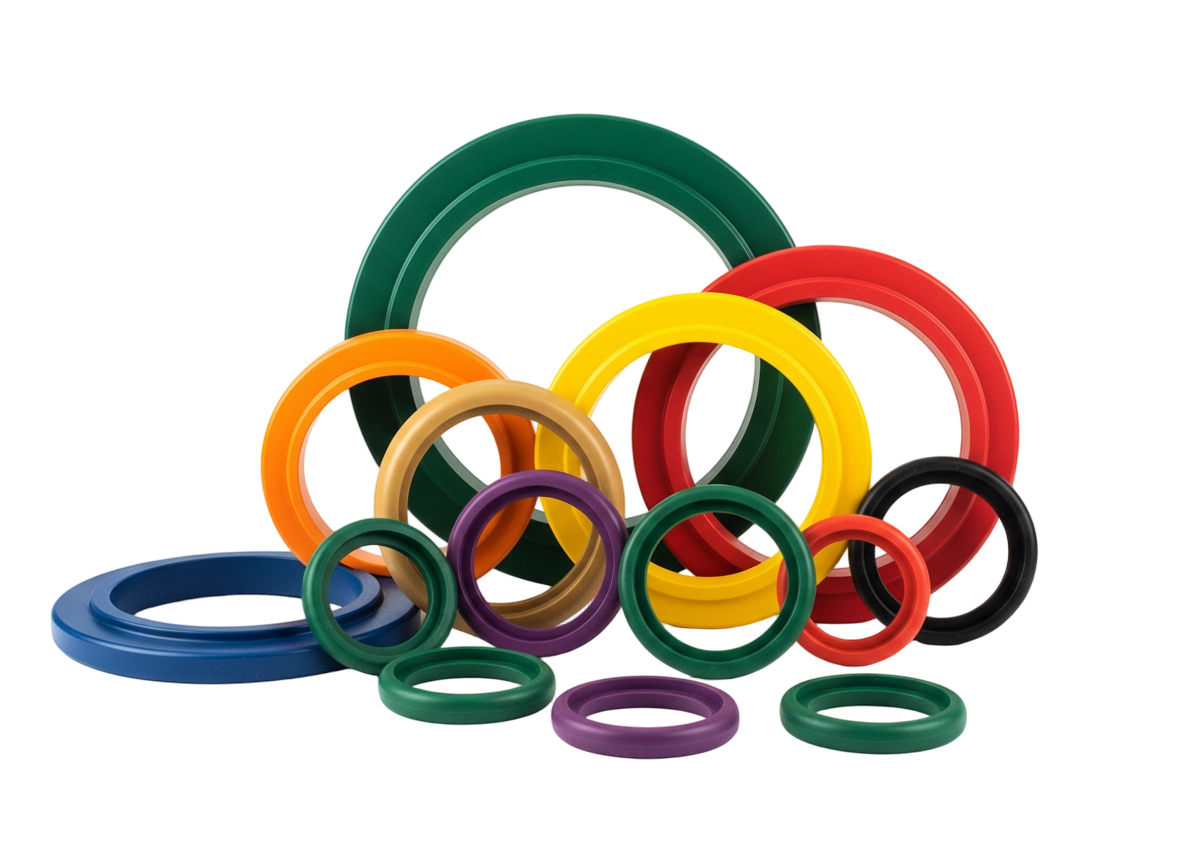
Hongjie has molded sealing components since 2001 and operates under IATF 16949:2016 and ISO 13485:2016 certification. These systems support automotive and medical-device programs that require formal quality documentation.
More than 3,500 existing O-ring tools are available, so fuel-resistant parts in common dash sizes may not require new tooling. For non-standard designs, the engineering team supports material selection, 3D CAD and FEA review against the groove design before production begins.
Custom O-ring programs cover material selection, tooling and first-sample approval from drawing to molded part. For solvents, acids and industrial process chemicals, chemical-resistant O-rings are available in FKM, FFKM and EPDM compounds.

Send us your drawing or sample part along with the fuel type, blend, and operating temperature, and we’ll recommend a compound and quote tooling if needed. STEP, IGES, and most major CAD formats are supported. Start a project discussion to get sizing and material feedback before committing to a production order.


Explore complementary sealing solutions from our comprehensive product catalog.