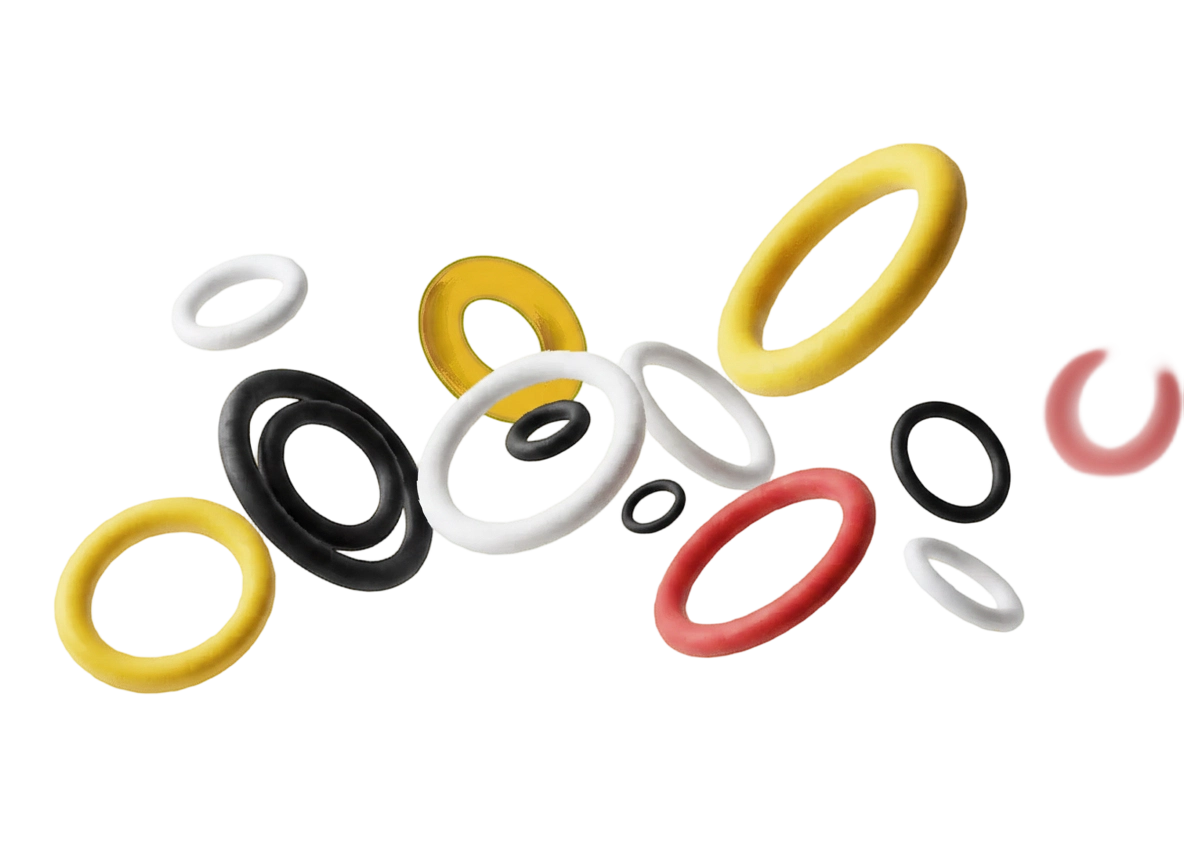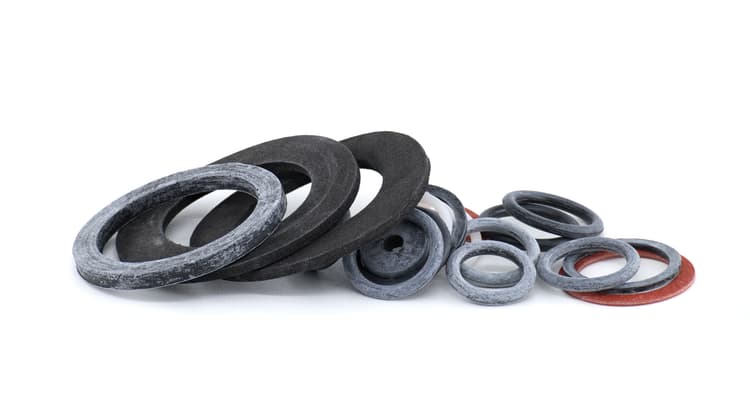
A wiring harness routed through a bare panel hole chafes against the cut edge every time the equipment vibrates, and the insulation eventually wears through. A rubber grommet lining that hole is what stops it.
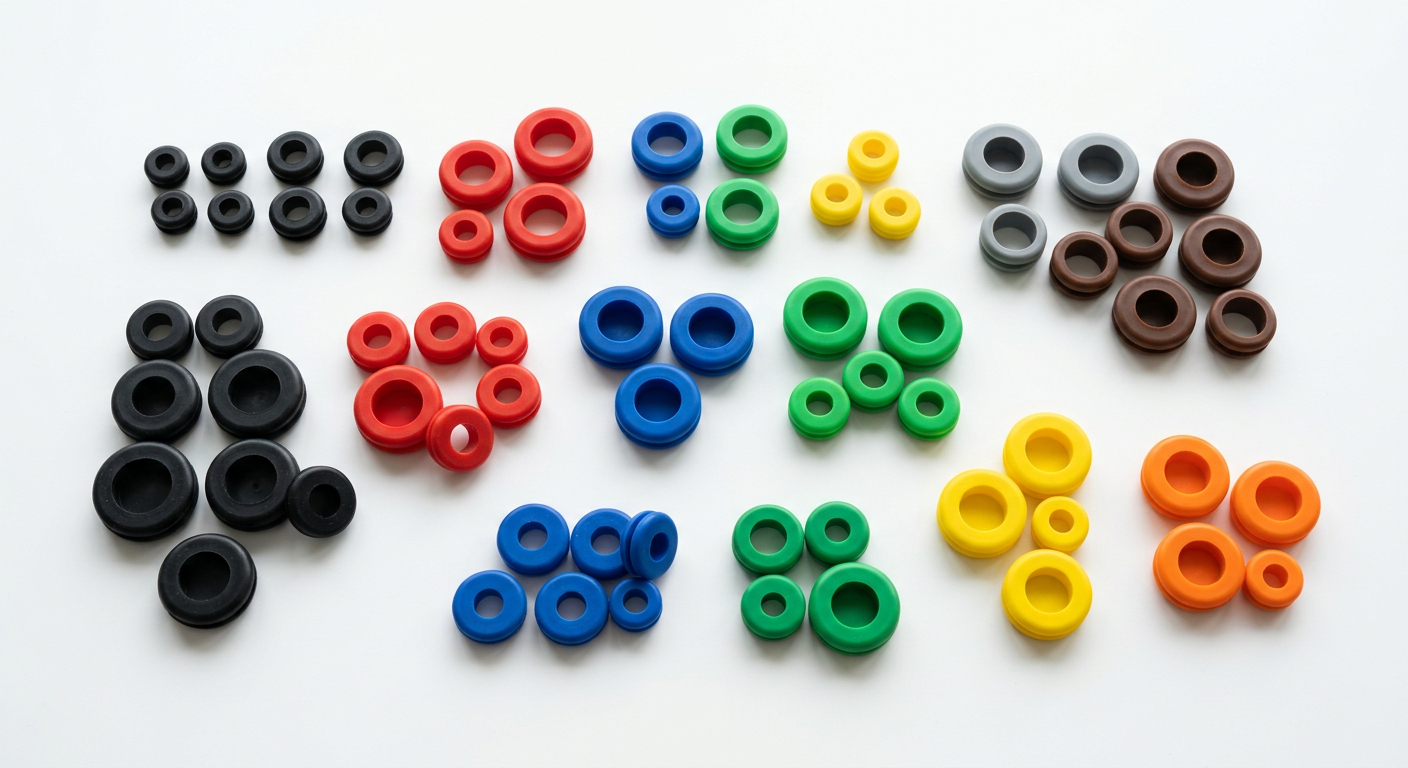
A rubber grommet is a ring-shaped rubber insert that sits inside a hole cut into a metal or plastic panel. Whatever passes through — wire, cable, hose, or a bolt — rests against the rubber instead of the raw cut edge. Grommets are usually molded from NBR, EPDM, or silicone (VMQ), chosen for oil resistance, weather resistance, or wide-temperature service respectively.
Same part, different labels depending on the catalog:
Grommets split three ways: by shape (round, oval, rectangular/panel-cutout), by structure (open single-hole, closed/blind, split), and by material family.
| Material | Typical Service Temp | Common Bore Diameter | Common Panel Thickness |
|---|---|---|---|
| NBR | -40°C to +120°C | 1/4″ – 2″ | 0.031″ – 0.250″ |
| EPDM | -50°C to +150°C | 1/4″ – 2″ | 0.031″ – 0.250″ |
| Silicone (VMQ) | -60°C to +200°C | 1/8″ – 1.5″ | 0.031″ – 0.188″ |
| Neoprene (CR) | -35°C to +100°C | 1/4″ – 2″ | 0.031″ – 0.250″ |
Exact ranges depend on the molded profile and compound grade.
The core job is edge protection, strain relief, vibration damping, and sealing against dust or moisture wherever something passes through a panel. Automotive wiring harnesses route through them at firewall and body panels. Electrical equipment enclosures use them at cable-entry cutouts. Home appliance housings rely on them around motor leads. Plumbing systems use grommet-style seals at feed-through points.
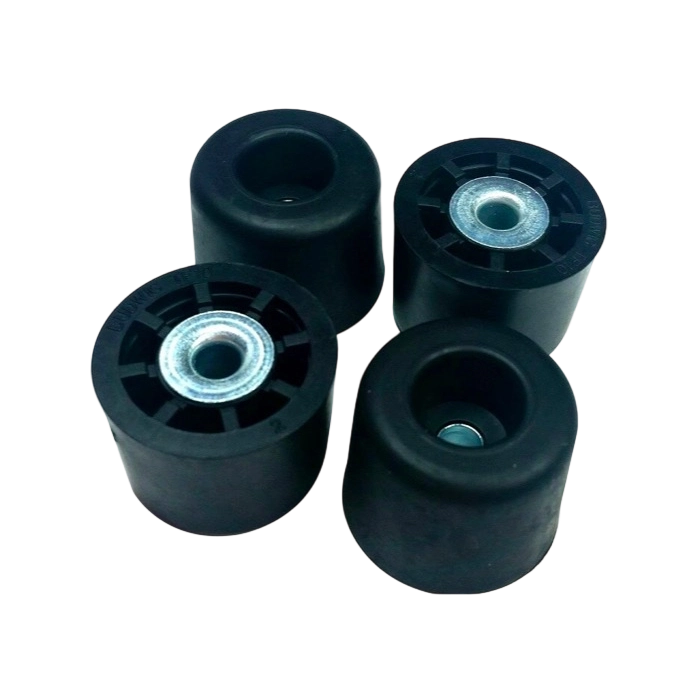
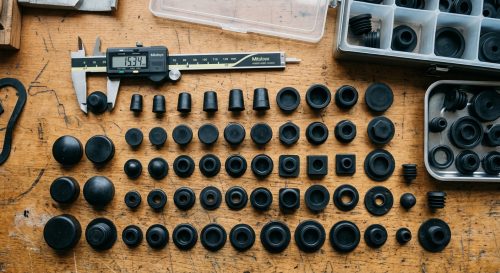
Four numbers matter: bore diameter (what passes through), panel hole size (what the grommet grips), panel thickness (measured with calipers — coatings and stack-ups add up fast), and temperature/chemical exposure. Deburr the panel hole first; a sharp lip will still cut through the grommet’s inner wall over time. Never force an undersized grommet over an oversized bore — it won’t seal and will eventually work loose.
Standard round, blind, and rectangular rubber grommets for panel cutouts cover most sizing scenarios. When a grommet isn’t the right fit for the application at all, Rubber Grommets vs the Alternatives: How to Choose walks through cable glands, strain-relief boots, and grooved bushings as substitutes. For a specific drawing or material question, talk to our engineers.
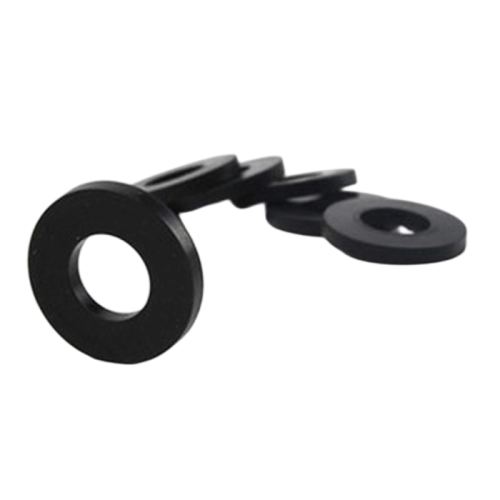
Grommets rarely sit alone on a panel — neighboring fasteners often carry types of rubber seals or types of rubber washers, so it’s worth checking material compatibility across all three.
For outdoor, wet or ozone-exposed panels, EPDM rubber grommets are the material-specific option.
Where the pass-through must also seal against water or dust, custom waterproof rubber grommets add a compression lip to the standard grommet form.
What is the purpose of rubber grommets?
They protect wire, cable, or hose from a sharp panel edge, cut vibration transfer between the panel and whatever passes through it, and — depending on the structure — seal the hole against dust and moisture.
Does Harbor Freight sell rubber grommets?
Yes, general hardware retailers carry basic grommet assortment packs in common wiring and panel sizes. For engineered sizes, specific materials, or custom shapes, an OEM manufacturer is the more reliable source, since retail assortments cover only a handful of standard bore/panel combinations.
What are the rubber grommets called?
Cable grommet, wire grommet, panel bushing, and snap bushing are the most common alternate names — they describe the same ring-shaped part, just labeled by application.
What to use instead of grommets?
Cable glands, grooved bushings, and strain-relief boots are the usual substitutes, depending on whether the priority is a moisture seal, a fixed cable clamp, or flex protection.


Our engineering team reviews your specs and responds within 24 hours with material recommendations and competitive pricing.