A rubber seal is any flexible elastomer part that closes a gap between two surfaces to keep something in or out. Most sealing failures trace back to one of three things — the wrong compound for the fluid or heat involved, not enough squeeze in the gland, or age pushing the material past its compression-set limit — and each one is traceable before a part ever ships.
A rubber seal is a molded or extruded elastomer part that fills the gap between two mating surfaces to block liquid, gas, dust, or sound. It works by compression: the rubber flexes into surface irregularities, then pushes back with even pressure against both faces — something a rigid metal or PTFE gasket can’t do without machining to a matching tolerance.
Most static rubber seals run 70–80 Shore A durometer — soft enough to conform to a rough flange face, firm enough to resist extrusion under bolt-down pressure. Seals riding against a moving shaft are often softer, in the 60–70 Shore A range, to cut friction and wear.

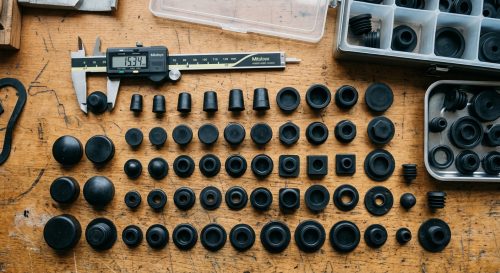
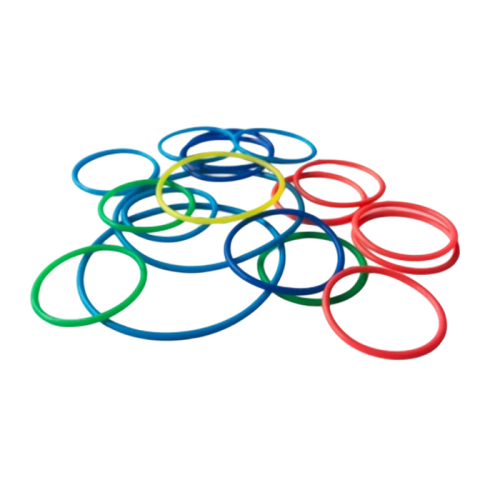
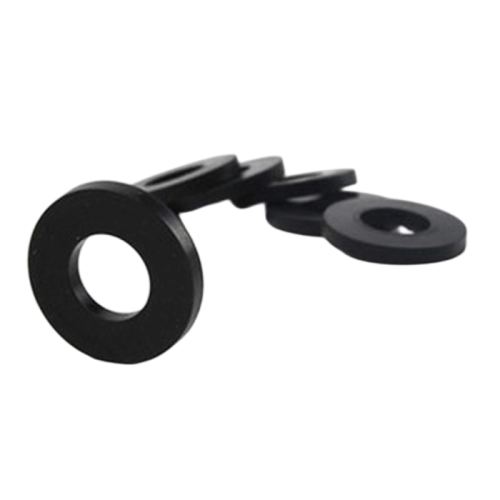
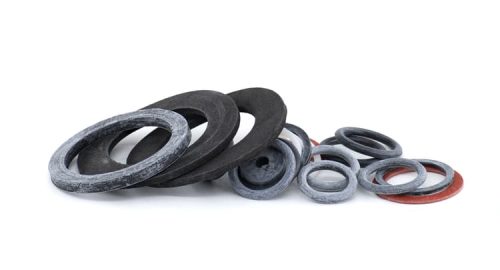
“Rubber seal” is an umbrella term. Most people actually mean a gasket (flat, compressed between bolted faces, static), an O-ring (round-section, sealing static joints or moving shafts), a grommet (ring insert protecting wire through a panel hole), a washer (flat disc under a fastener), or packing/weatherstripping/sealing strip (regional names, usually for extruded profiles rather than molded shapes).
A gasket isn’t a separate material — it’s a rubber seal shaped flat for a bolted joint, while an O-ring handles a moving shaft within the same family of parts. Deciding between a grommet, a washer, or one of the other types of rubber grommets usually comes down to whether the joint is static or moving and whether the surfaces are flat or round.
| Compound | Typical Temp Range | Best For |
|---|---|---|
| NBR (Nitrile) | -30°C to +120°C | Oils, fuels, hydraulic fluid |
| EPDM | -50°C to +150°C | Water, weather, ozone, steam |
| Silicone (VMQ) | -60°C to +200°C | Food/medical contact, wide temp swings |
| FKM (Viton) | -20°C to +200°C | Aggressive chemicals, fuels, high heat |
Three mechanisms account for most field failures. Wrong compound for the environment — an NBR seal exposed to ozone or steady UV can crack within a season; a compound rated to +120°C running sustained duty at +150°C degrades in weeks, not years. Insufficient squeeze — most O-ring glands are designed for 10–25% cross-section squeeze; drop below roughly 8% and there isn’t enough interference to hold contact through pressure swings or thermal contraction. Compression set — every rubber seal takes some permanent set under sustained load; once that set exceeds roughly 30–40% of the original squeeze, the seal no longer springs back far enough to maintain contact, and it leaks at rest even though it looked fine on installation.
To diagnose which of these applies to a specific leak — and what to change in the design — read Sealing Failure: 12 Common Causes, Symptoms & Fixes.
Silicone caulk or sealant handles static, low-movement gaps but won’t survive repeated flexing. Foam tape seals light gaps but compresses permanently under sustained load. Cork or PTFE gaskets suit some static joints; metal seals reach heat rubber can’t, but none flex and recover the way rubber does.
A rubber seal blocks liquid, gas, dust, or moisture between two surfaces while damping vibration and noise. It does this through compression — squeezed into a gland, it fills surface irregularities and maintains contact pressure as long as it hasn’t taken excessive set.
In practice, the three failure mechanisms above show up as: a cracked, hardened surface (wrong compound for heat/UV/ozone); a flattened profile that no longer springs back (compression set); or swollen, soft rubber where it contacts a fluid it wasn’t rated for (chemical attack). Matching compound to media and gland design to squeeze prevents most of this.
It depends on the compound — petroleum-based lubricants like WD-40 can dry out or swell some rubber types, especially natural rubber and EPDM, with repeated use. FKM and silicone tolerate it better. A rubber-safe silicone lubricant is the safer default when the compound is unknown.
Enclosure lids, doors and housings that must keep water out are covered under waterproof rubber seals.
Hongjie manufactures custom O-rings and rubber seals in NBR, EPDM, silicone, FKM/Viton, and other compounds from an IATF 16949 and ISO 13485 certified facility in Shenzhen, exporting to 45+ countries, with functional prototypes ready in 3–5 business days from a CAD drawing. See the Custom O-Rings & Rubber Seals Manufacturer overview for material and process options, or request a quote with your drawing or failed sample and our engineers will confirm compound and squeeze before tooling starts.

Our engineering team reviews your specs and responds within 24 hours with material recommendations and competitive pricing.