Rubber bushings almost always fail for one of five reasons: age-related hardening from heat and ozone exposure, chemical attack from oil or coolant, mechanical overload beyond the compound's fatigue limit, wrong hardness for the application, or simple compression set after years of cyclic loading. The good news is that each cause leaves a distinct fingerprint — a crack pattern, a smell, a specific type of noise — so you rarely have to guess. This guide walks through what to look for, what's actually happening inside the rubber, and what to check before you place a replacement order.
Most bushing failures announce themselves long before total breakdown. The trick is knowing which noise or sensation maps to which failure mode, instead of just swapping parts and hoping.
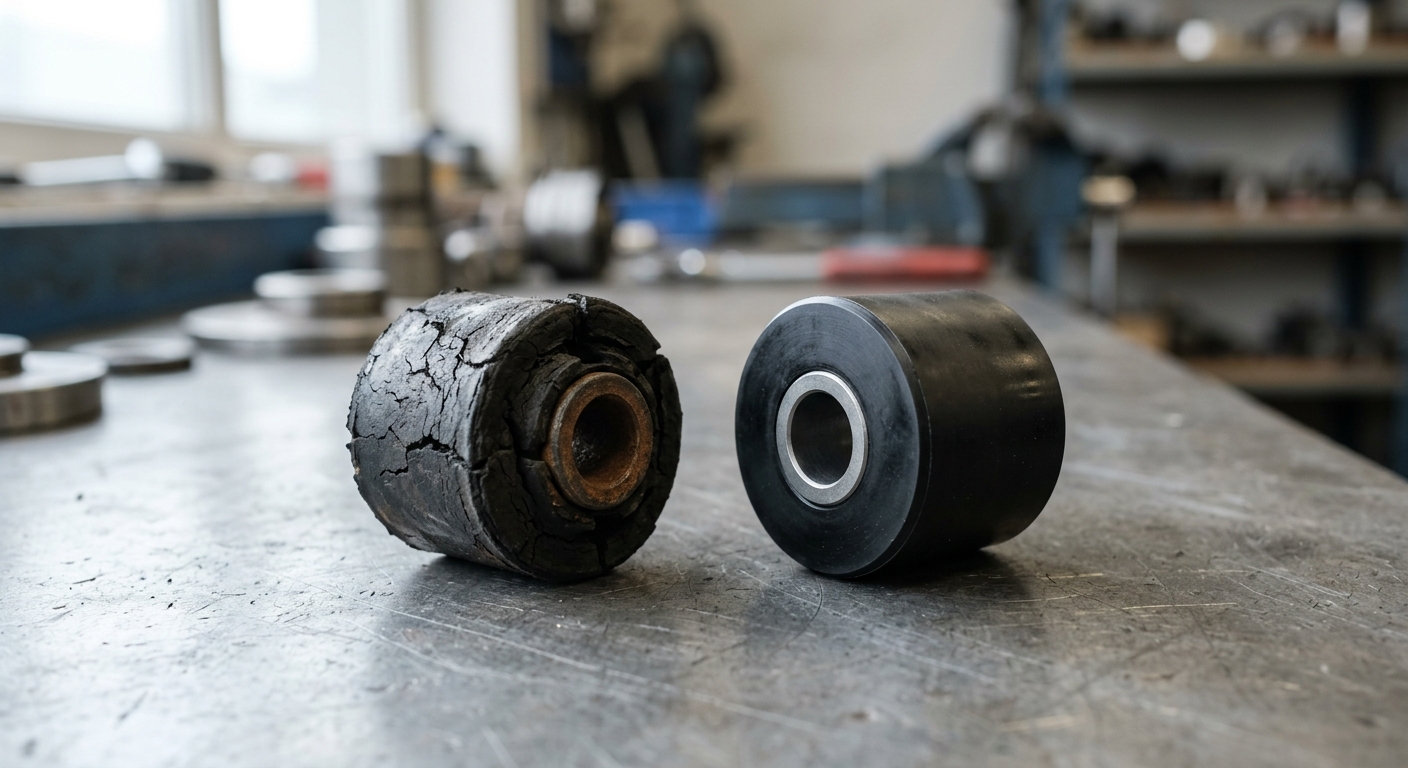
A bushing that looks like dried mud — networked surface cracks, especially on the side facing the sun or an engine bay — is suffering ozone or UV degradation. Standard NBR has poor ozone resistance; EPDM handles it far better. If your outdoor or engine-adjacent application keeps producing cracked bushings, the material spec is probably wrong, not the design.
A knock when you hit a bump or reverse direction usually means the bushing has torn away from its metal sleeve internally, even though the outside still looks intact. Squeeze it by hand — if you feel a hollow give or hear a faint crackle, the bond has failed.
This points to compression set: the rubber has been squeezed so long it no longer springs back to fill the gap. It's a slow, cumulative failure, not sudden damage.
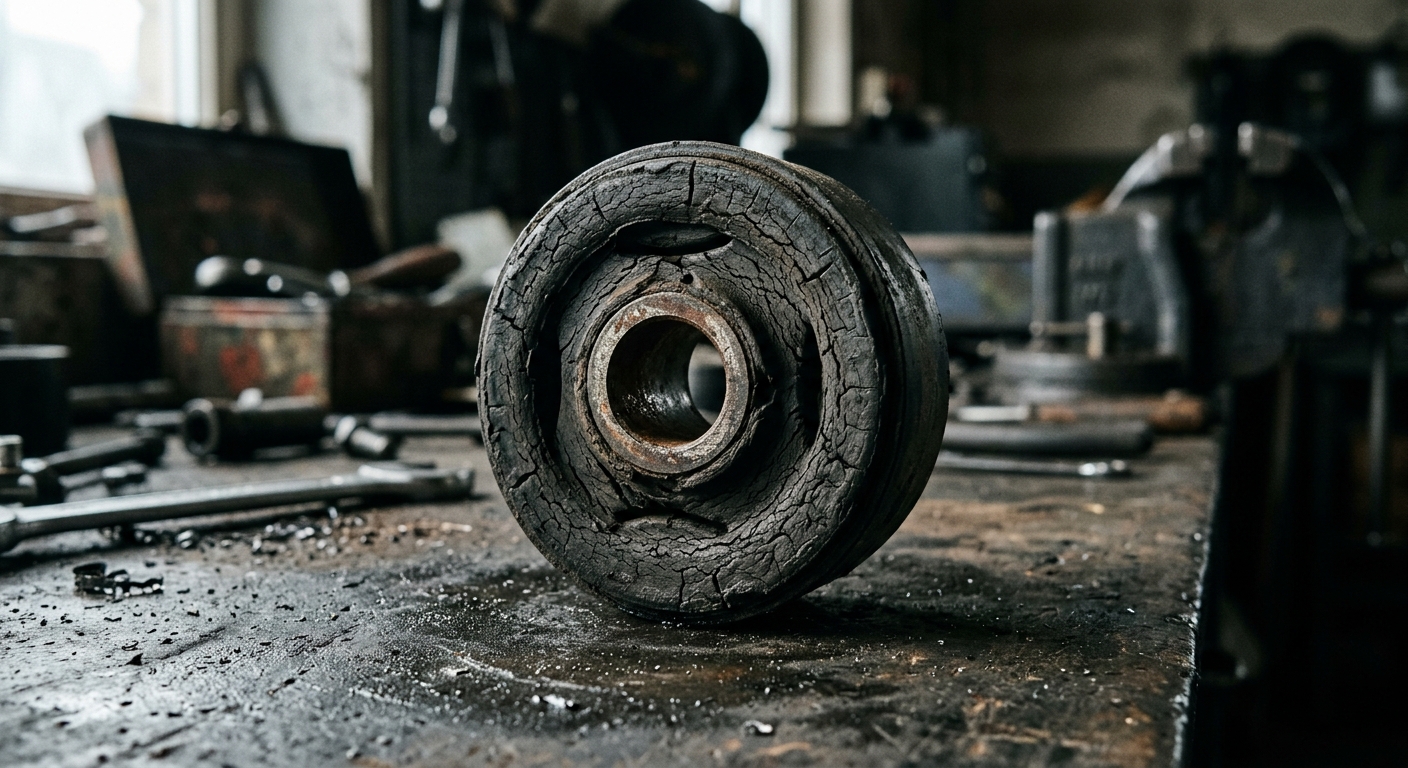
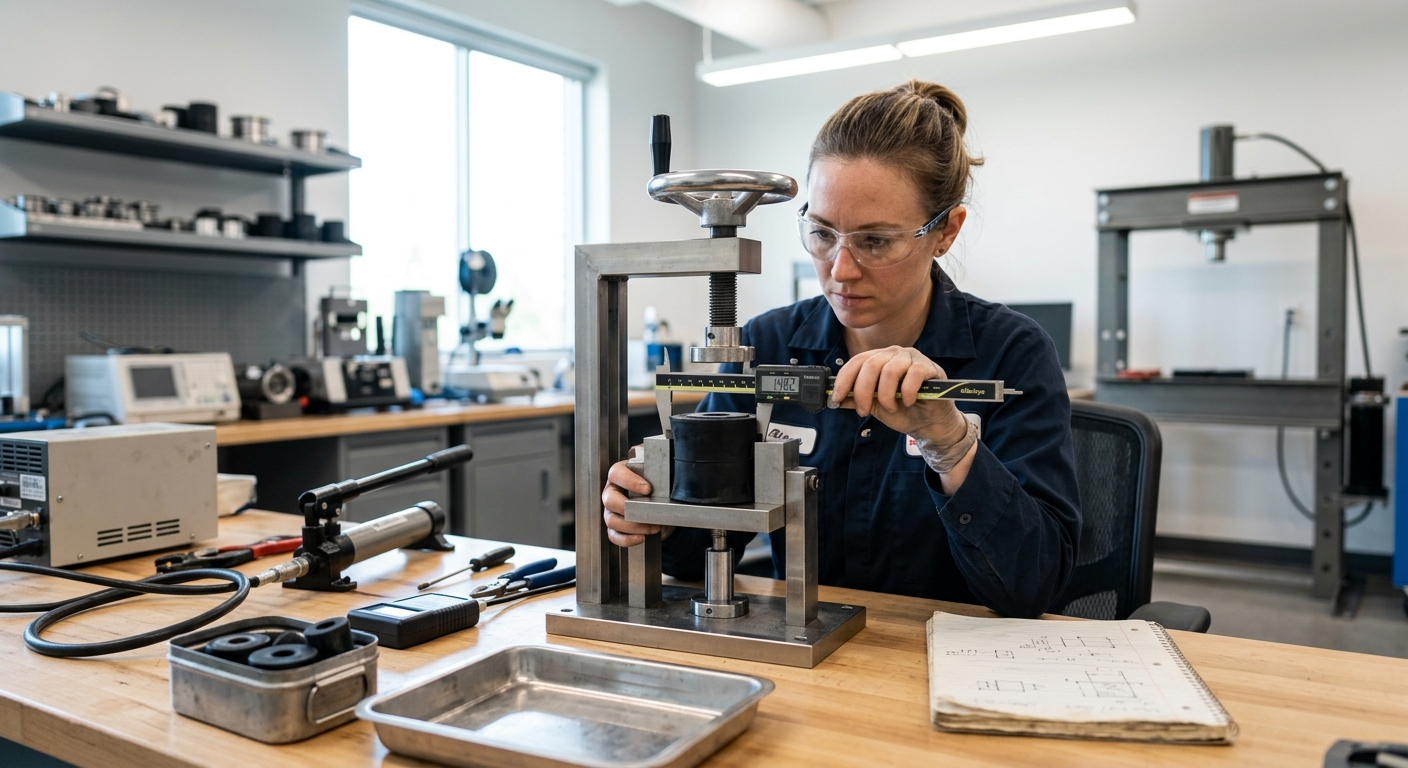
Every elastomer loses some rebound over time — that's compression set, and it's measured as a percentage of original deflection the material fails to recover after load removal. A bushing sitting under constant preload for five years in a suspension mount can lose 20-30% of its original spring-back, even without visible damage.
The practical effect: the bushing no longer isolates vibration the way it used to, and metal-to-metal contact starts creeping in. This is why a bushing that 'looks fine' can still need replacing — compression set doesn't always show up visually.
Higher-quality compounds with better resilience (higher rebound elastomers, properly cured HNBR or EPDM) resist this far longer than cheap, under-cured NBR fillers. If you're specifying a custom bushing, ask your manufacturer for compression set data (ASTM D395) at your expected service temperature, not just at room temperature.
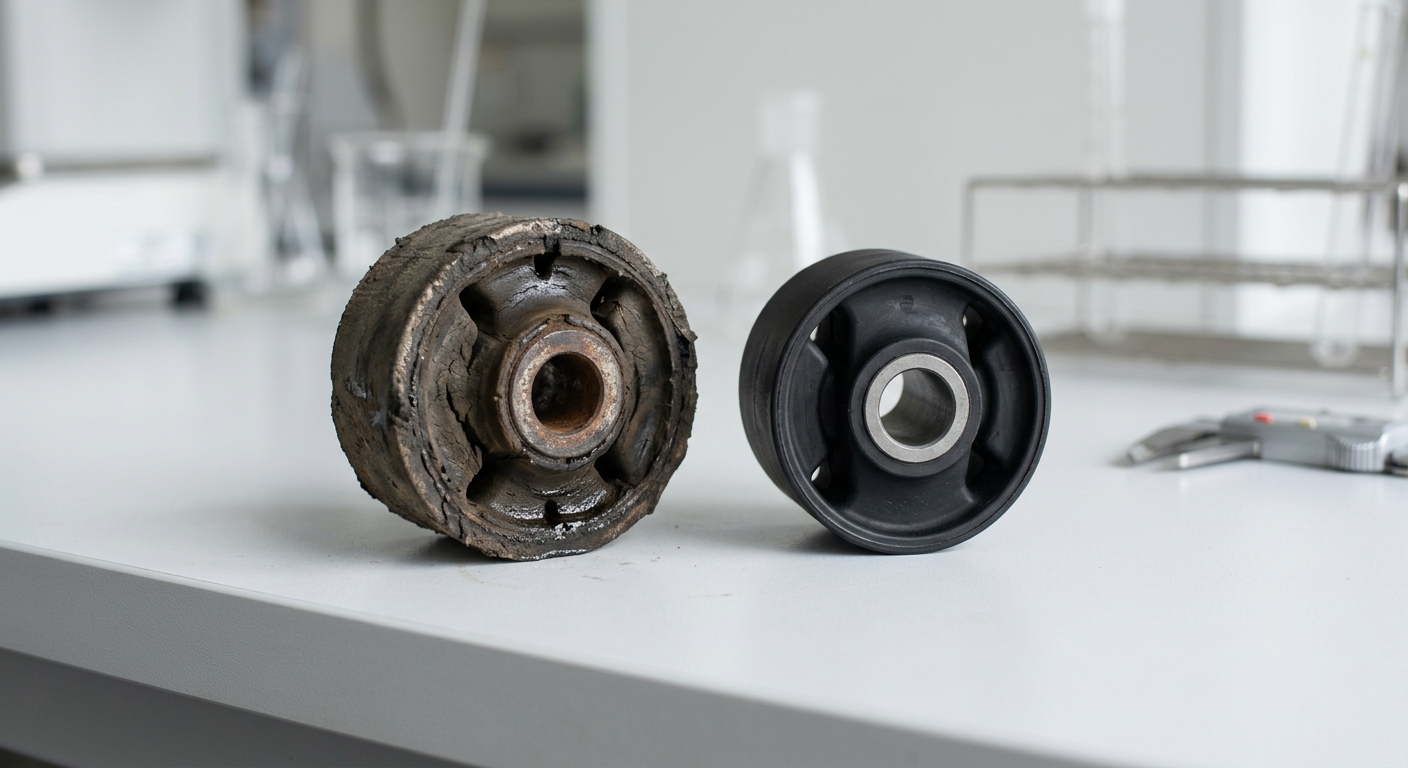
Swollen, sticky, or unusually soft rubber almost always means fluid exposure the original design didn't account for. NBR handles mineral oils fine but swells badly in brake fluid or certain synthetic esters. Neoprene tolerates some refrigerants but not aromatic fuels.
For example, an industrial equipment OEM once traced a string of bushing failures to a hydraulic fluid switch made by their own maintenance team — the new fluid was ester-based, and the NBR bushings swelled within months. Switching to FKM solved it permanently, at a modest cost increase per part.
Before ordering replacements, list every fluid the bushing contacts — including cleaning agents and coolant splash, not just the primary working fluid. This single step prevents most repeat failures.
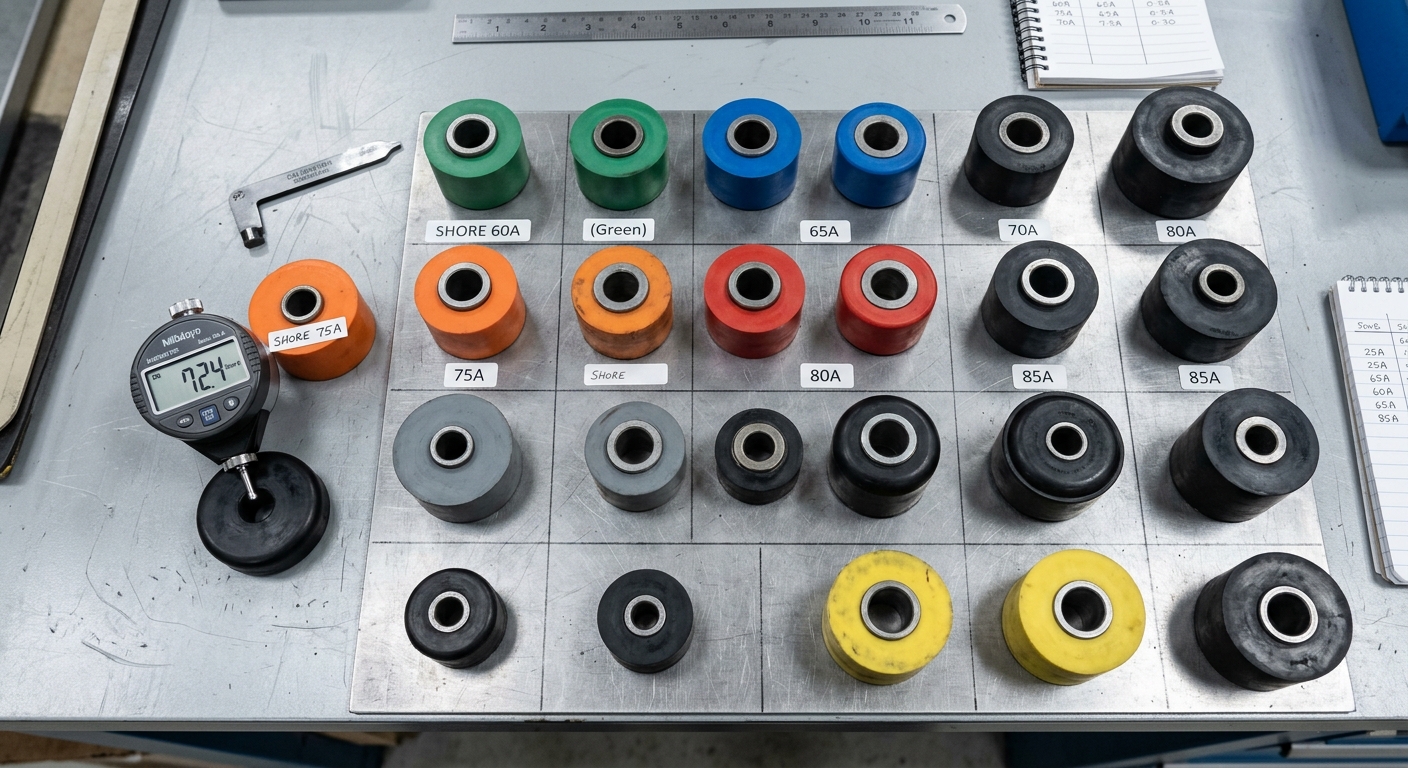
Durometer isn't a minor spec — it's often the whole reason a bushing fails prematurely. A 40 Shore A bushing absorbs vibration beautifully but tears under heavy shock load. A 70 Shore A version handles load fine but transmits more noise and vibration than the design intended.
If you're replacing a failed bushing with an identical spec and it fails again in the same way, the original spec was likely wrong from the start — not just worn out. This is where working with an engineering-led supplier pays off, since hardness, geometry, and bonding all need to be reconsidered together, not just the material.
Bushings near engines, exhaust runs, or outdoor equipment endure repeated heating and cooling cycles that most indoor components never see. Each cycle causes microscopic expansion and contraction, and over hundreds of cycles that adds up to surface micro-cracking.
NBR starts losing flexibility around 100°C continuous exposure; EPDM handles heat and ozone significantly better and is the go-to choice for outdoor and under-hood bushings unless there's direct oil exposure, where EPDM's poor oil resistance rules it out. Silicone handles wider temperature swings but sacrifices tear strength — usually not ideal for load-bearing bushings.
This is the same failure logic covered in our breakdown of O-ring root causes — material selection for thermal exposure matters more than most buyers assume until they've replaced the same part three times.
Ordering an identical replacement without checking anything is how the same failure repeats itself. Run through this before placing the order:
For custom or high-volume replacement runs, it's worth having a manufacturer review the full product spec rather than matching dimensions alone.
Sometimes the rubber isn't the problem — the housing geometry is. If a bushing keeps failing in the exact same spot across multiple replacements, look at the metal sleeve tolerance, the bore roundness, and whether the bushing is being asked to handle both radial and axial load when it was only designed for one.
A medical equipment manufacturer we've worked with had repeat bushing tearing at a specific mounting point — the fix wasn't a better rubber compound, it was widening the bore chamfer by half a millimeter to remove a stress concentration point during insertion. No material change needed.
This mirrors a broader theme in sealing design covered in our gland design guide: the rubber component often gets blamed for what is really a mating-part geometry issue.

Our engineering team reviews your specs and responds within 24 hours with material recommendations and competitive pricing.