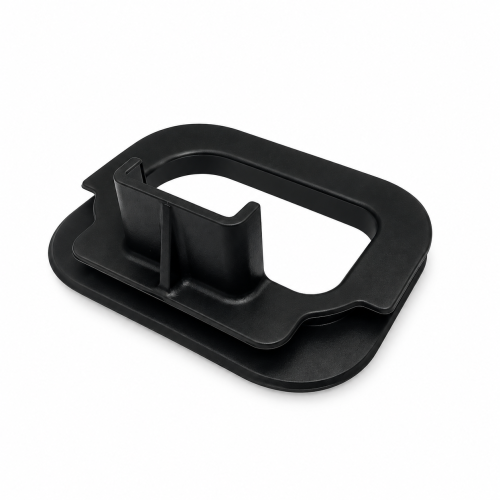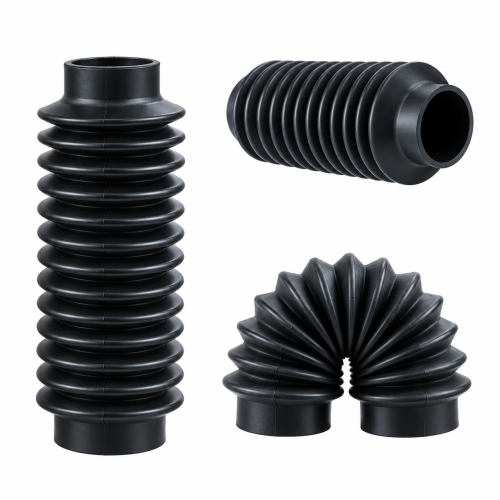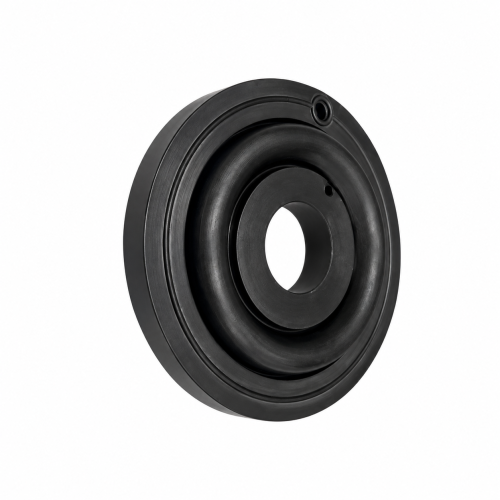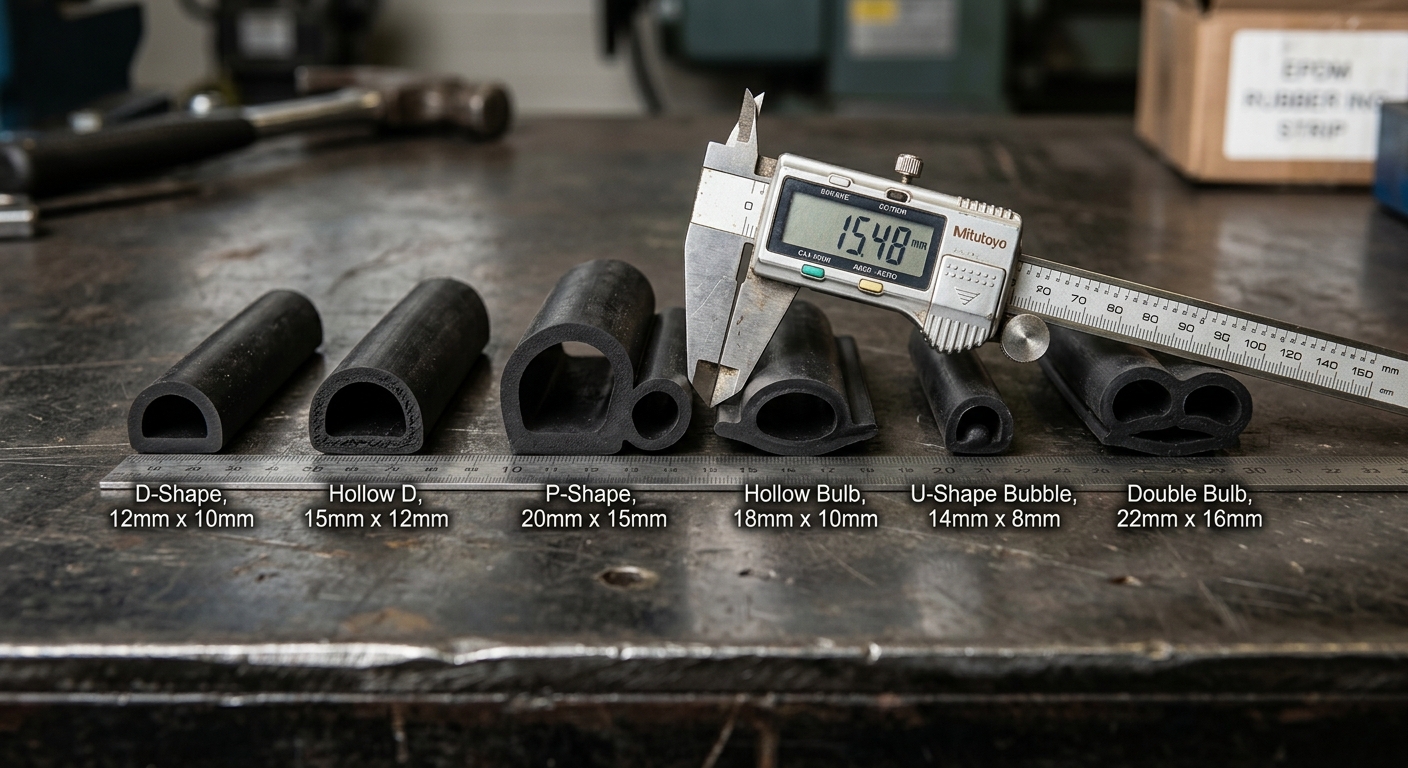
Match the profile to your gap tolerance, not the other way around: use a solid D-profile for tight, consistent gaps under 3mm, a P-profile or U-channel for edge-mounted applications with moderate variation, and a hollow bulb seal for gaps from 5mm up to 15mm where compression force needs to stay low. Get this wrong and you either end up with a strip that never fully compresses (leaving a gap) or one that's crushed flat and permanently deformed within a year. The gap size — and how much that gap varies — should be the very first thing you measure before you even open a material catalog.
Most buyers start by picking a material — EPDM because it's cheap, silicone because it handles heat — and only think about profile shape afterward. That's backwards. A sealing strip only works if it can compress enough to fill the gap without bottoming out or over-stressing the rubber, so the geometry of the gap should come first.
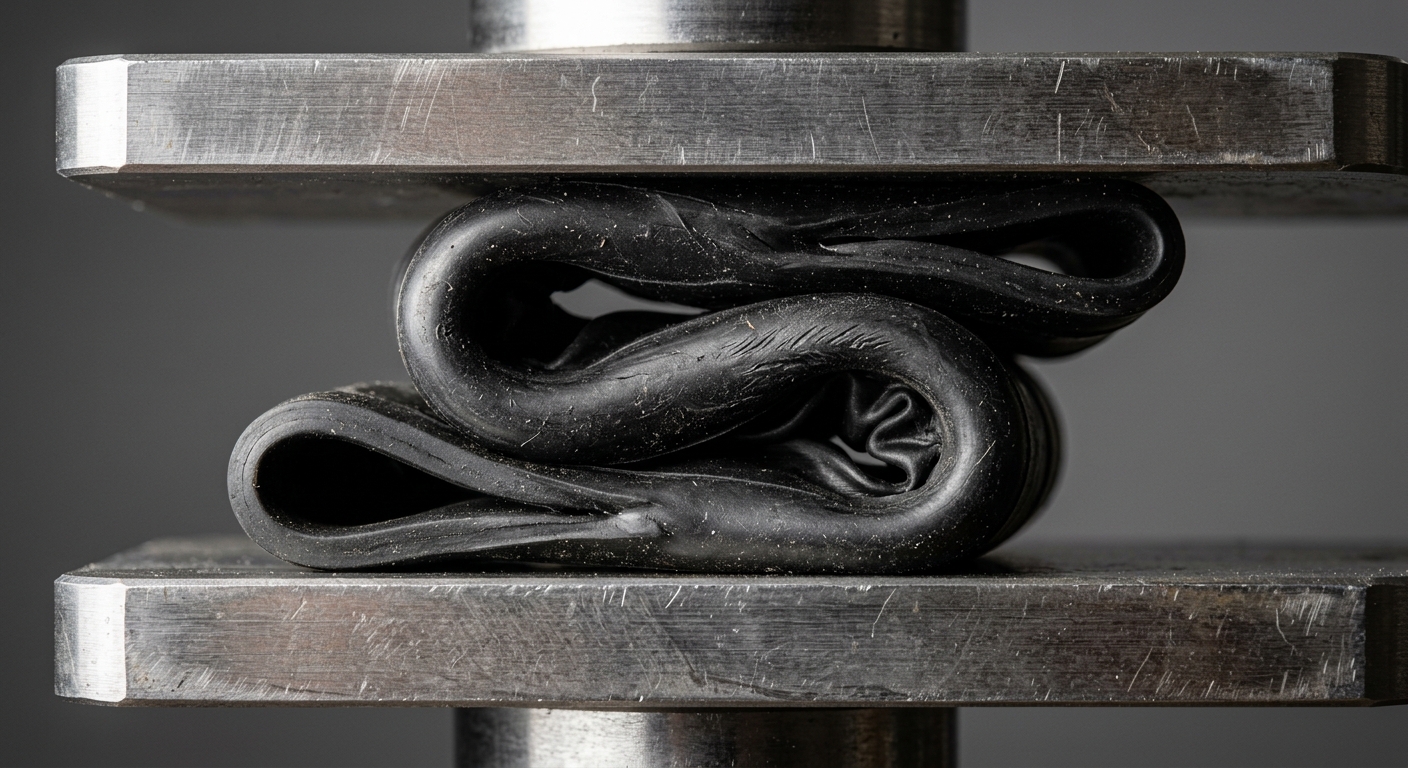
Here's the rule of thumb: a solid rubber profile should be compressed between 20% and 35% of its free height to seal properly and still recover its shape. Compress it less than that and you get gaps and vibration. Compress it more and you're looking at permanent set — the rubber stays flattened even after the load is removed. If your gap varies by more than a few millimeters across the application (common in sheet metal enclosures with stack-up tolerance), a solid profile simply won't work everywhere. That's when hollow or bulb profiles earn their keep, because they can absorb a much wider compression range at low force.
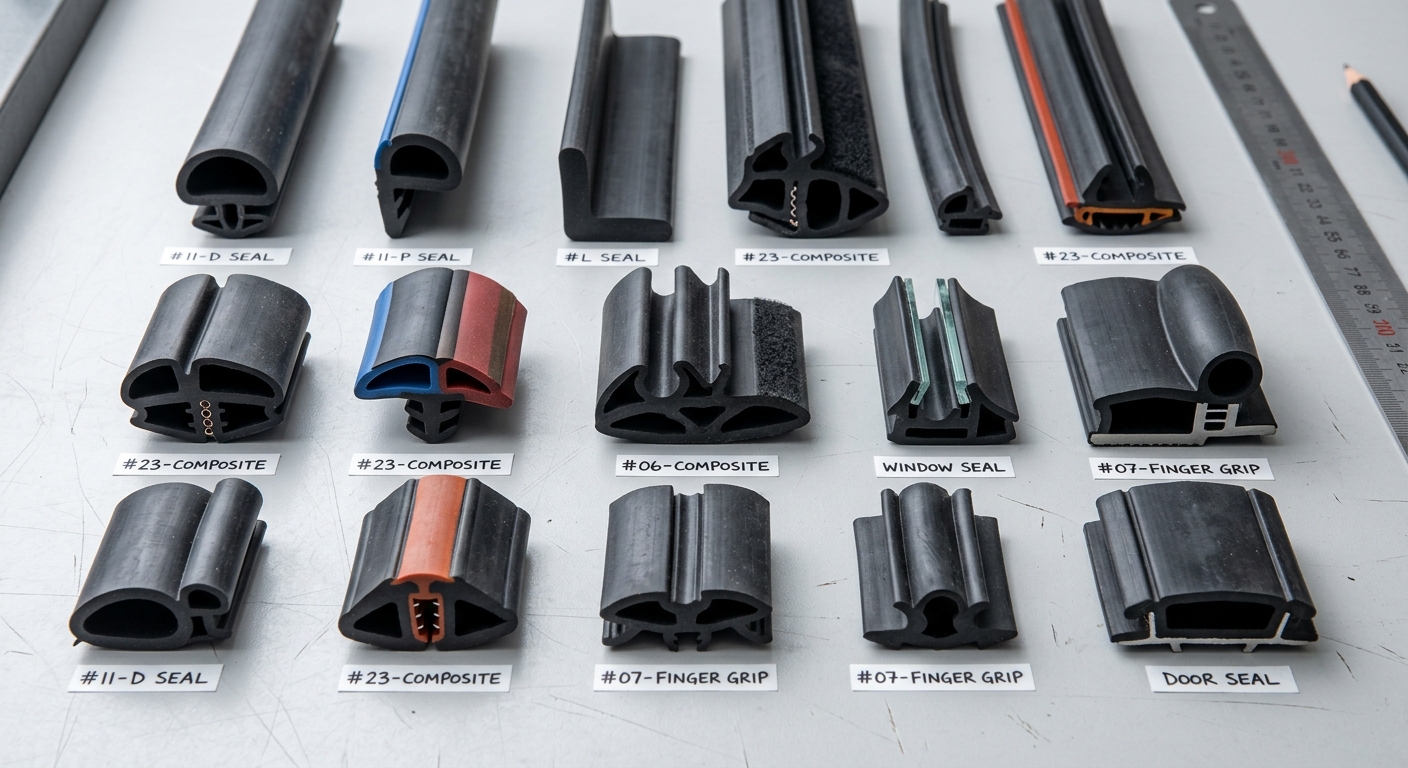
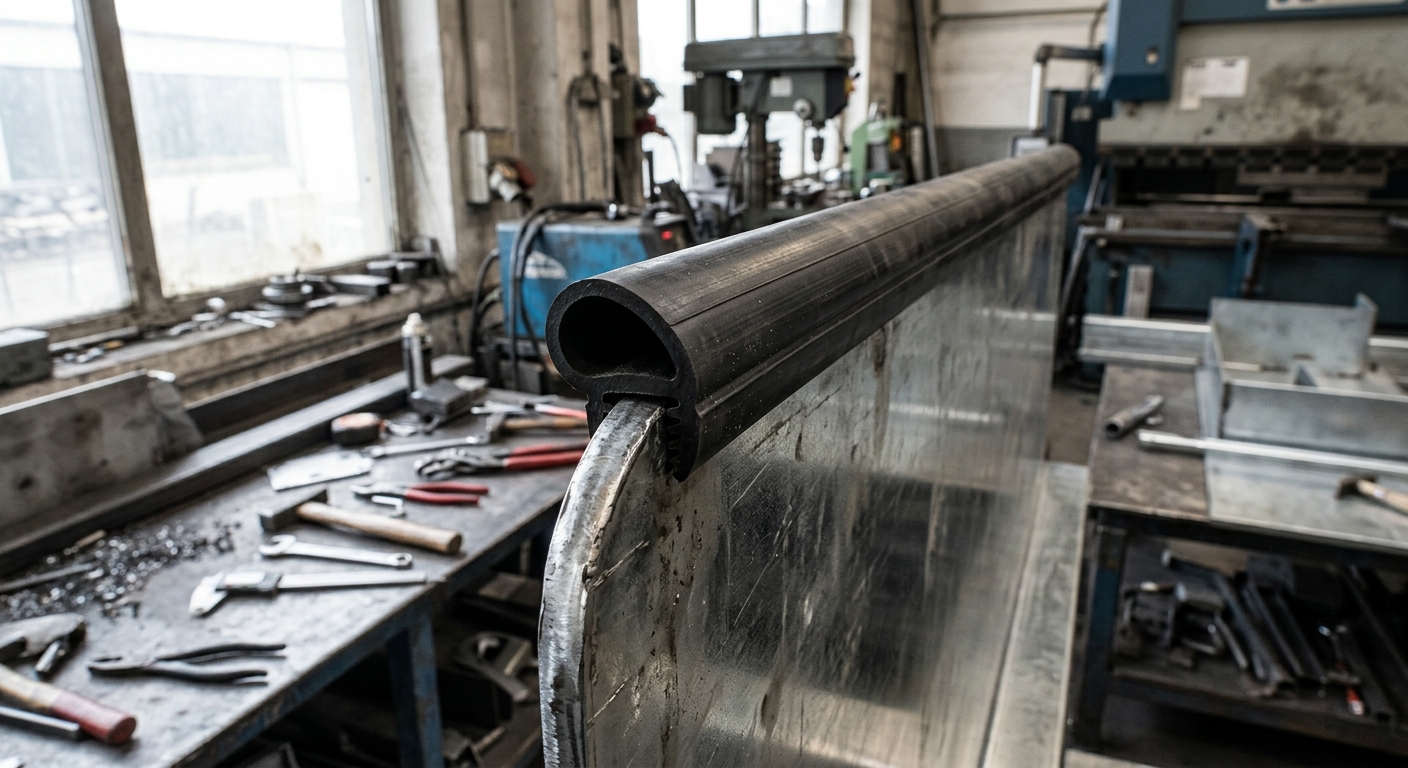
If your gap is consistently 1-3mm and doesn't move much, a solid D-profile is the simplest and most reliable choice. It's a rounded solid strip that compresses under moderate force and gives a firm, predictable seal — think cabinet doors, electrical enclosure covers, or access panels with tight machining tolerances.
The problem shows up when the gap isn't consistent. A D-profile sized for a 2mm gap will feel loose at 1mm points and may not fully compress at 3mm points along the same door. Because it's solid, it has almost no give beyond its rated compression range — unlike foam or hollow designs. For applications with tight, machined tolerances (die-cast housings, precision enclosures) this isn't an issue. For anything stamped or welded, it often is.
When the strip needs to clamp onto a sheet metal edge rather than sit in a groove, P-profiles and U-channels are the go-to shapes. The U-channel base grips the panel edge (often reinforced with a steel or PVC-coated wire insert for retention), while the bulb or flap portion handles the actual sealing against the gap.
A U-channel by itself doesn't seal a gap — it's a mounting method. Pair it with a P-shaped bulb and you get both edge retention and gap sealing in one extrusion. This combination is common on control cabinet doors and machinery access panels where gaps run 3-6mm and the mounting surface is a raw or painted metal edge rather than a machined groove.
For instance, an industrial enclosure manufacturer switching from a bolted flat gasket to a P-profile edge trim can cut assembly time significantly — the strip snaps onto the panel edge during fabrication instead of requiring a separate gasket-cutting and gluing step.
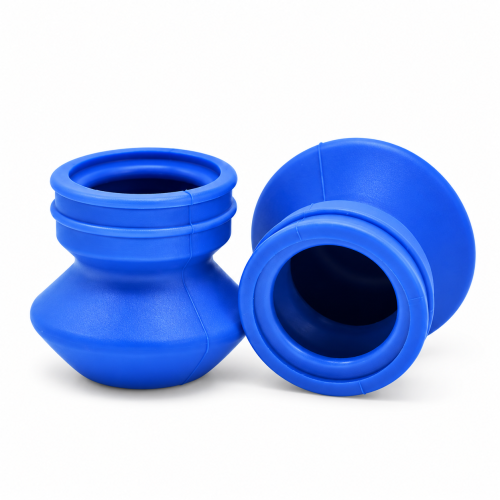
Hollow bulb seals exist for one reason: to seal large or variable gaps without requiring huge closing force. Because the tube is hollow, it collapses easily under light pressure and can accommodate gap variation of several millimeters along its length — something a solid profile can't do without either leaving gaps or crushing flat.
As a starting point, choose a bulb seal whose uncompressed height is roughly 130-150% of your maximum gap. So for a 10mm gap, look at a bulb with a free height around 13-15mm. That leaves enough compression margin to handle gap variation without fully collapsing the tube and losing its sealing force. Wall thickness matters too — a thinner-walled bulb compresses more easily (good for low-force applications like light enclosure doors) while a thicker wall holds up better under repeated heavy closing, like on outdoor equipment cabinets exposed to wind loading.
A practical example: a food processing equipment builder needed to seal an access door with a gap that varied between 6mm and 11mm due to hinge wear and frame flex. A solid profile sized for 6mm would have left a 5mm gap at the worst point. Switching to an EPDM bulb seal rated for 5-12mm compression solved it without redesigning the frame.
Profile shape and material aren't independent decisions — they interact. EPDM is the default for outdoor and general industrial sealing strips because it resists UV, ozone, and weathering while staying flexible down to about -40°C. Silicone is worth the extra cost when the gap seal sits near a heat source, since it holds flexibility up to 200°C+ without hardening. Neoprene shows up in older automotive and marine designs for its oil resistance, though EPDM has largely replaced it in newer sealing strip designs due to better weathering performance.
One thing buyers often miss: a hollow bulb profile in a soft 40-50 Shore A compound behaves very differently from the same shape molded in a firmer 60-70 Shore A compound. Softer compounds seal wider gap variation with less force but wear faster under repeated cycling. If your door or panel opens and closes hundreds of times a day, factor cycle life into the hardness choice, not just the initial seal quality.
Don't just measure the gap once and call it done — measure it at the tightest and loosest points across the full range of motion or assembly tolerance. A hinged access door, for example, might have a 2mm gap when new and closed square, but flex to 5mm at one corner under normal use. If you size your strip only for the 2mm measurement, that corner will leak.
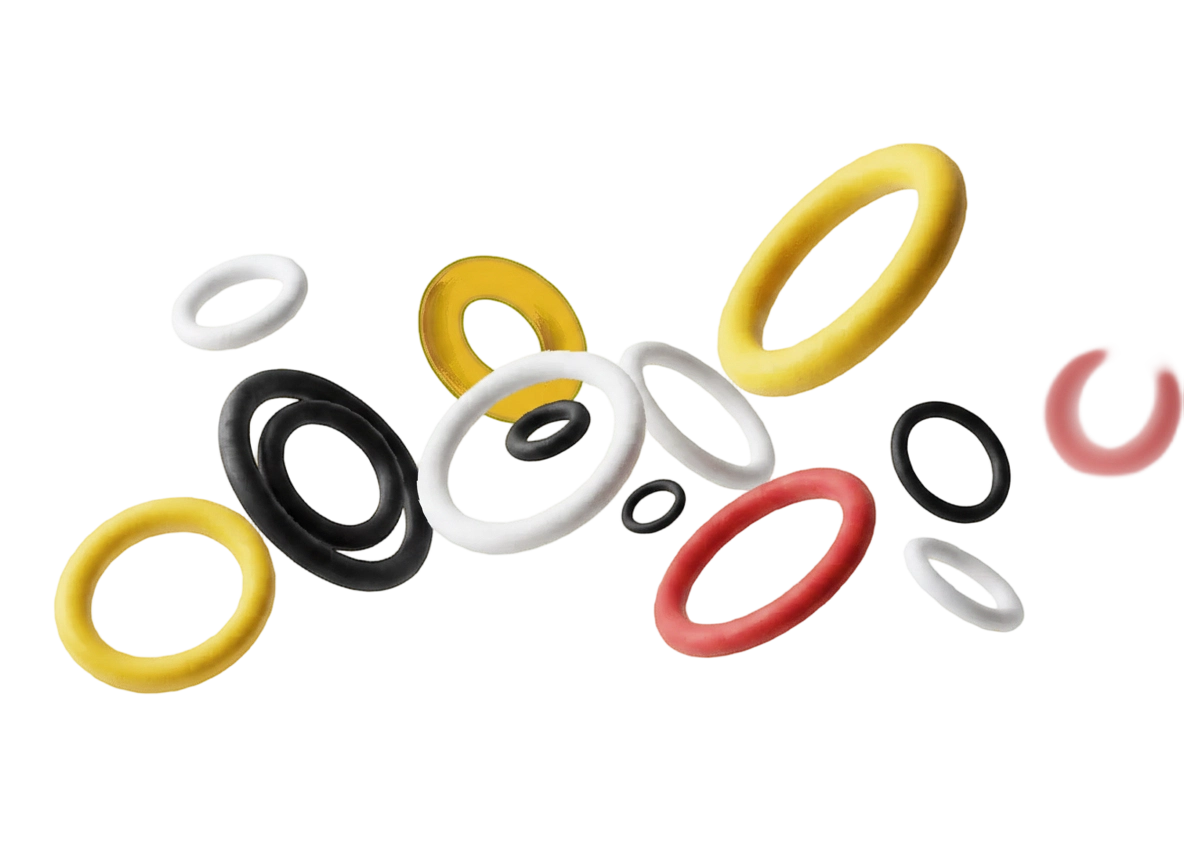
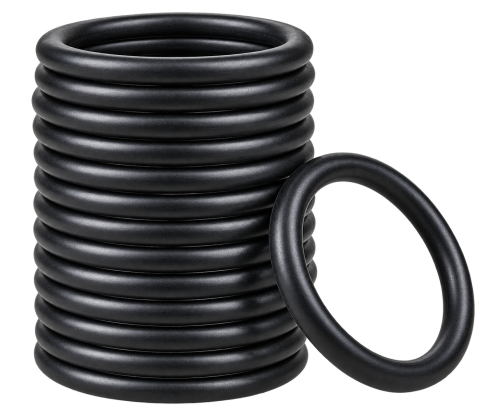
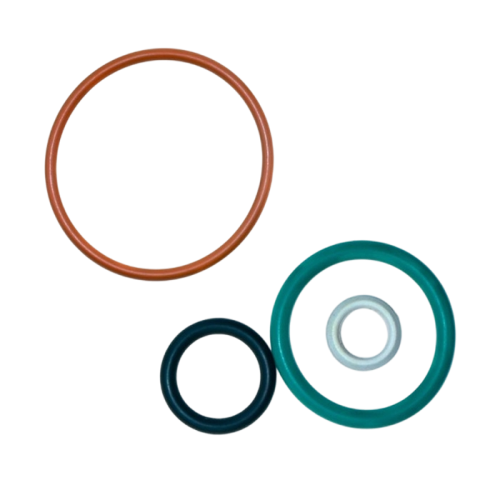
This is the same logic used in O-ring gland design, where squeeze and gland fill are calculated against a tolerance range, not a single nominal number. Sealing strips deserve the same rigor.
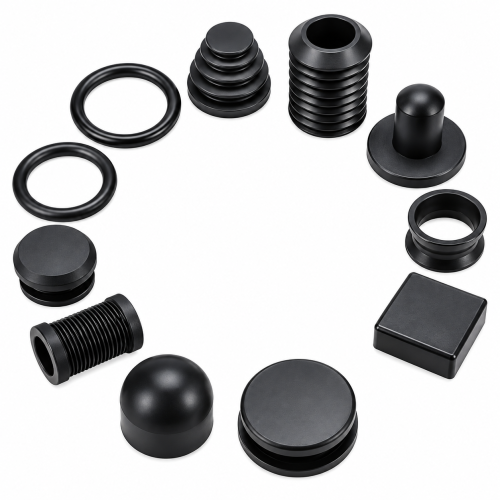
Standard D, P, and bulb profiles cover most common gap ranges, but they won't always match unusual mounting geometry, tight installation clearances, or specific compression force limits (common in medical equipment enclosures where closing force is limited by hinge strength). In those cases, a custom extruded or molded profile — sized exactly to your gap range and mounting edge — outperforms forcing a catalog part to fit.
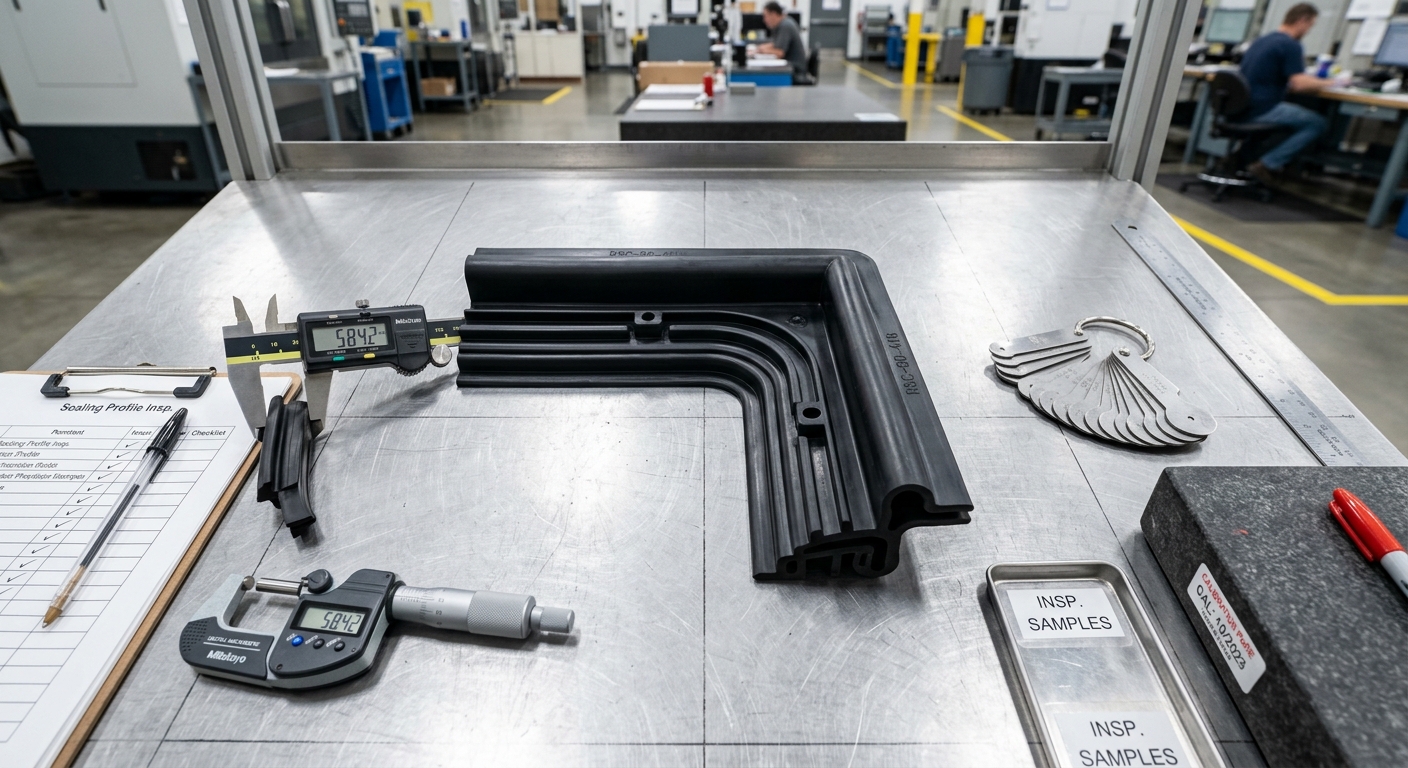
Custom tooling also lets you combine features: an integrated mounting flange, a dual-durometer profile (firm base, soft sealing lip), or a corner-molded piece that avoids weak mitered joints at door corners. If your application has corners, T-junctions, or unusual cross-sections, this is usually where standard extrusions fail first — joints pull apart under repeated flexing long before the straight sections wear out.

Our engineering team reviews your specs and responds within 24 hours with material recommendations and competitive pricing.