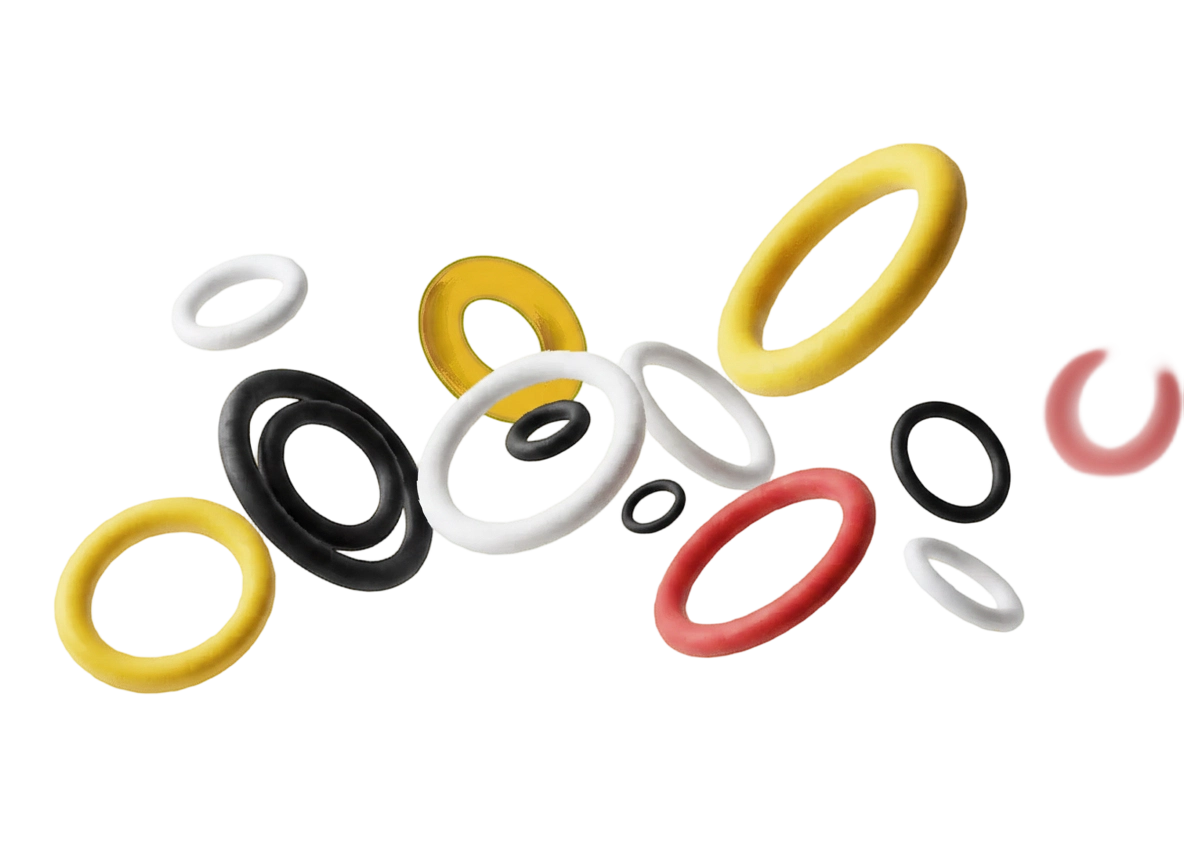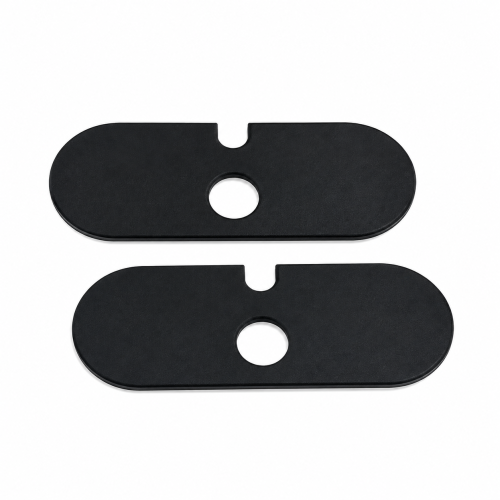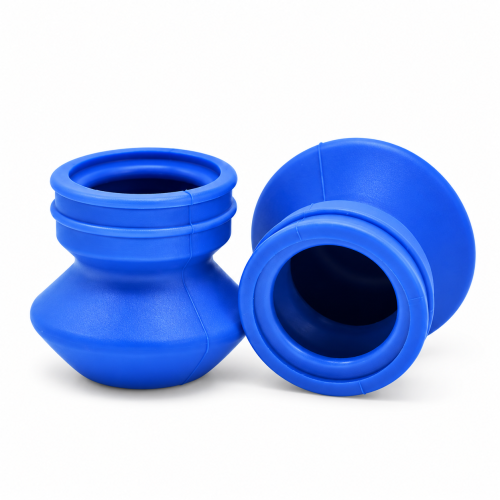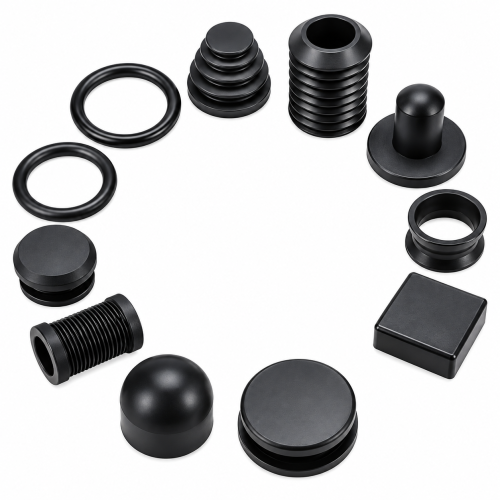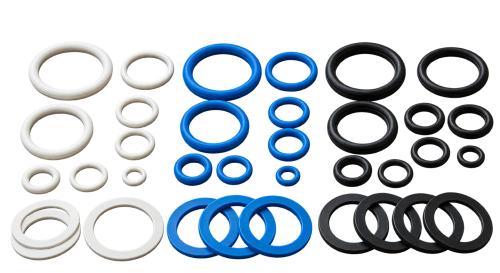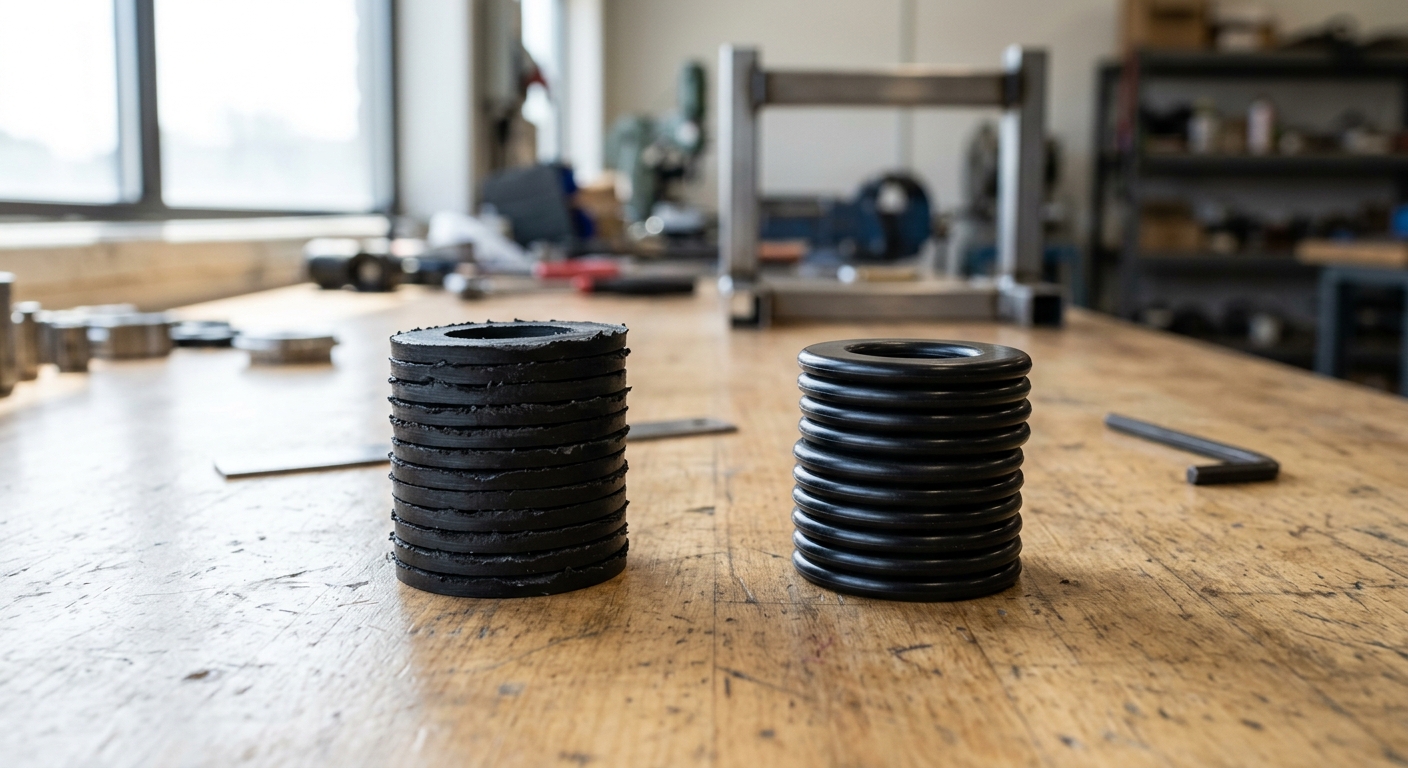
For prototypes and small runs under roughly 5,000 pieces, die-cutting is almost always cheaper and faster because it skips tooling entirely — you just stamp shapes out of pre-cured sheet stock. For production volumes above that, compression or injection molding pulls ahead on tolerance, part complexity, and per-piece cost, even though the upfront mold investment is higher. The right call depends less on which process is “better” and more on where your project sits on the volume curve.
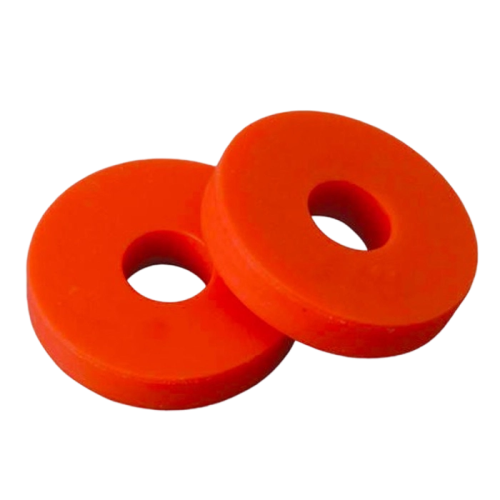
Die-cutting sounds simple because it is: a steel rule die or rotary die punches washer shapes out of a flat sheet of already-vulcanized rubber, similar to a cookie cutter. No heat, no curing, no mold flow — just mechanical cutting. That's why tooling is cheap and turnaround is fast.
Molding is a different animal. Raw rubber compound gets loaded into a cavity, then heat and pressure cure it into shape. Compression molding presses a slug of material into a closed mold; injection molding shoots pre-heated compound through a runner system into the cavity. Either way, the part forms and cures at the same time, which means the mold itself defines every dimension of the washer — not a secondary cutting step.
This distinction is exactly why molded parts hold tighter tolerances: the geometry is locked into hardened tool steel, not dependent on blade sharpness or sheet thickness variation.
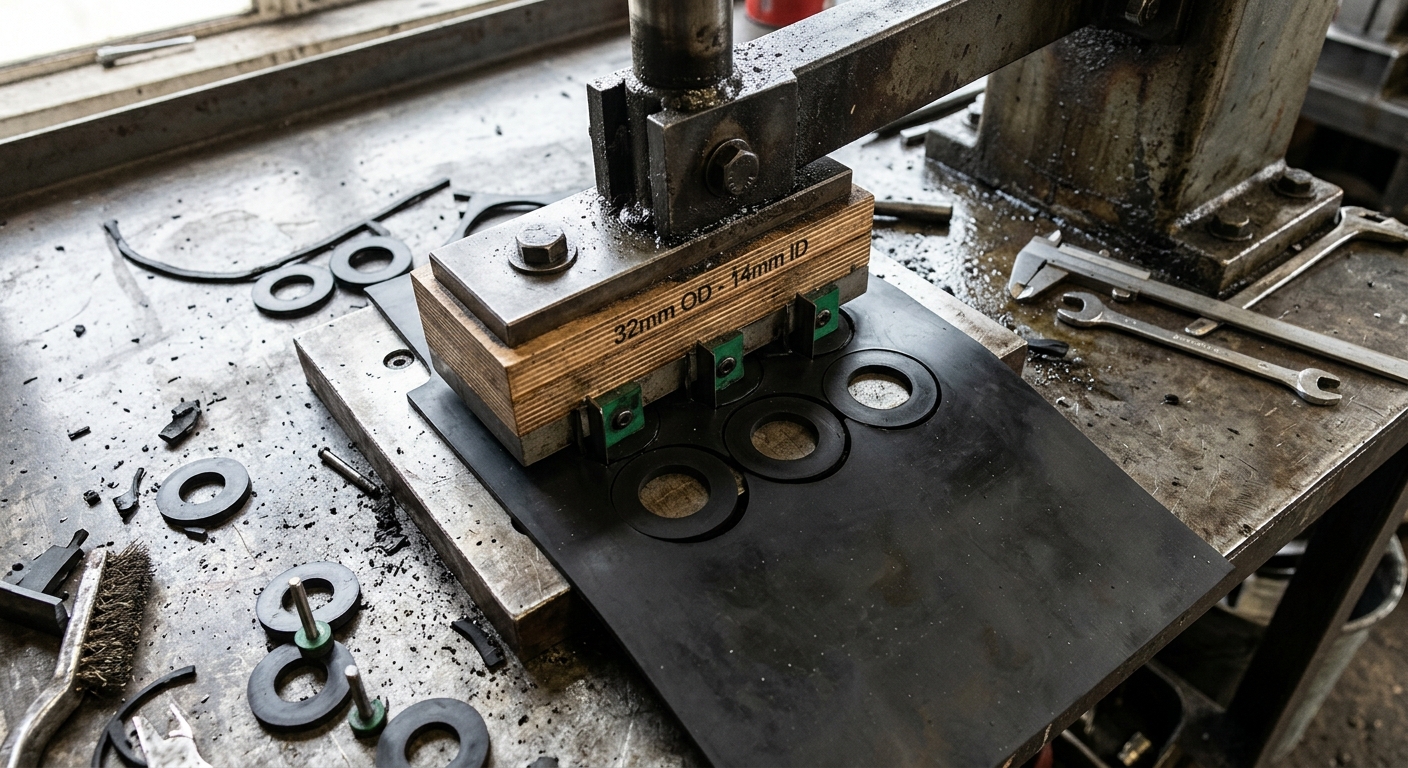
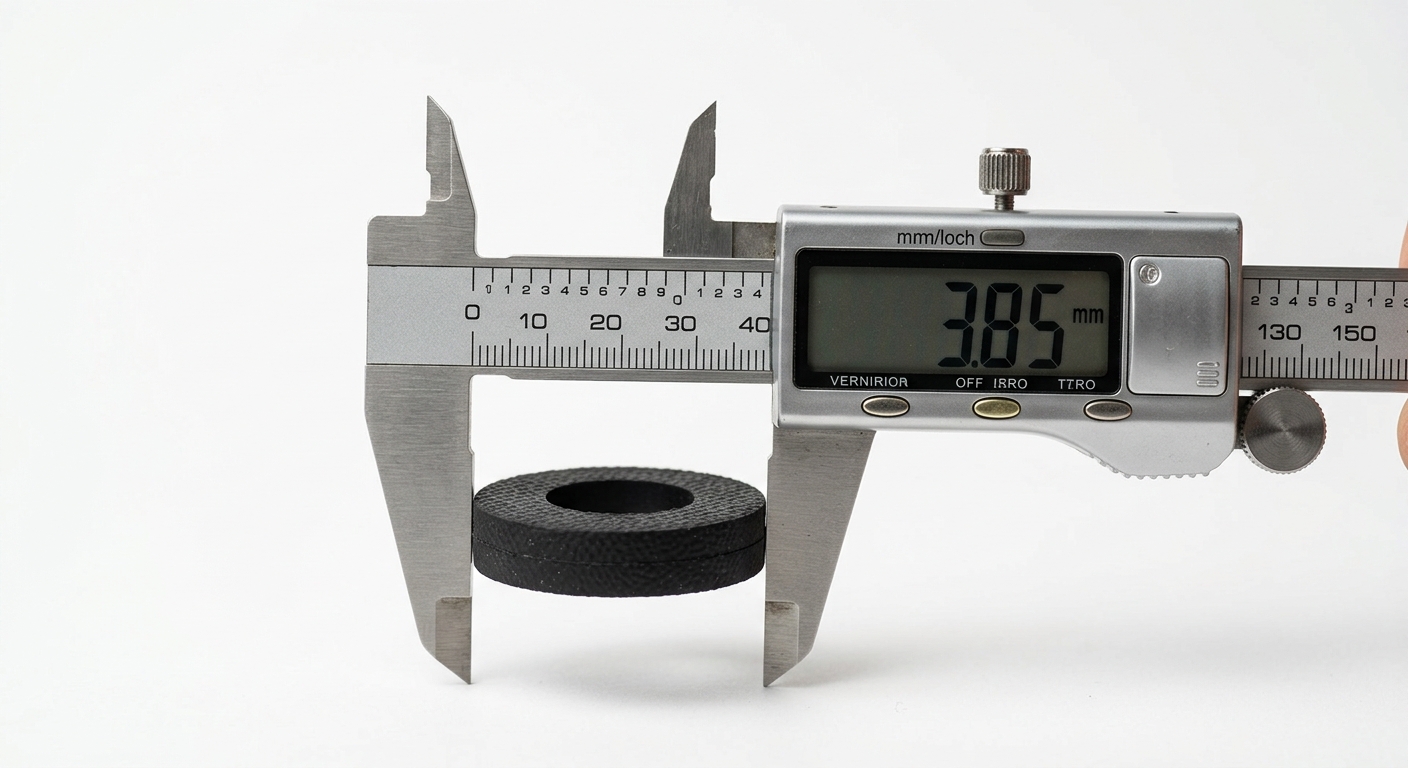
If your washer just needs to fit loosely around a bolt as a spacer, die-cut tolerances of ±0.10-0.15mm are fine. But if you're sealing against a critical mating surface, controlling compression set precisely, or stacking washers in an assembly where cumulative tolerance matters, that 0.10mm swing adds up fast.
Die-cut washer thickness is only as consistent as the sheet stock it came from — and commercial rubber sheet can vary ±0.05-0.10mm across a roll, on top of the cutting tolerance itself. Molded washers cure to the exact cavity depth, so thickness variation across a production run is dramatically tighter.
For example, a hydraulic fitting manufacturer needing a washer that seals against 3,000 PSI with a consistent compression load will see leak-rate inconsistency with die-cut parts pulled from variable sheet stock — but not with molded parts holding ±0.05mm thickness batch after batch. If your application involves pressure sealing, review our guide on why rubber O-rings keep failing — many of the same root causes (dimensional inconsistency, compression set) apply to washers too.
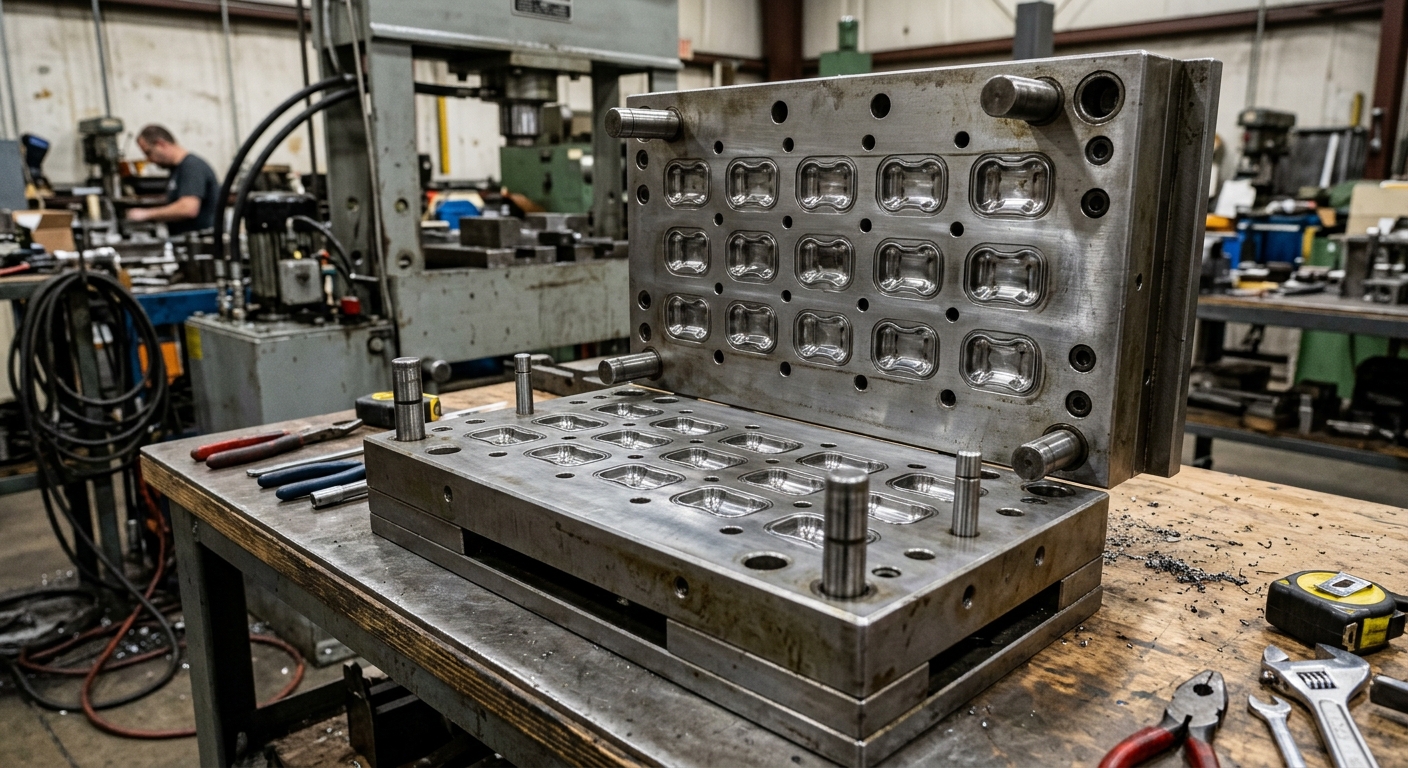
A steel rule die for a simple round washer typically runs $50-$500 depending on size and complexity. A compression mold for the same part starts around $800-$1,500 for a single-cavity tool, and can climb past $5,000 for multi-cavity molds designed for high-throughput production.
Here's the part buyers often miss: die-cutting doesn't get cheaper per piece as volume climbs. You're still cutting one washer at a time (or one row at a time with rotary dies), so labor and machine time scale roughly linearly with quantity. Molding, especially multi-cavity injection molding, can produce dozens of parts per cycle — so the fixed mold cost amortizes fast, and per-piece cost drops sharply above a few thousand units.
Say a simple NBR washer costs $0.08 to die-cut per piece with a $150 die, versus $0.03 per piece molded with a $1,200 eight-cavity mold. At 2,000 pieces, die-cutting total cost is about $310 versus molding at $1,260 — die-cutting wins. At 30,000 pieces, die-cutting totals $2,550 while molding totals $2,100 — molding wins, and the gap widens fast beyond that point.
There's no universal magic number, but for most washer geometries the crossover sits somewhere between 3,000 and 8,000 pieces annually. Below that, die-cutting's low tooling cost outweighs its per-piece inefficiency. Above it, molding's lower marginal cost takes over.
A distributor stocking washers for a plumbing fitting line, for instance, might order 50,000 pieces a year across several SKUs. Even with a $2,000 mold investment per size, the long-run savings dwarf what die-cutting would cost at that scale.
Die-cutting only works on flat 2D shapes cut from sheet stock. If your washer needs a stepped profile, a chamfered edge, an integrated lip, dual-hardness construction, or any raised sealing bead, die-cutting is out — full stop. Molding can produce all of that in a single cycle because the geometry lives in the cavity, not in a blade.
This matters more than buyers expect. A washer with a molded-in sealing rib, for example, can outperform a flat die-cut washer of the same material in leak resistance, because the rib concentrates compression force exactly where it's needed rather than spreading it evenly across a flat face.
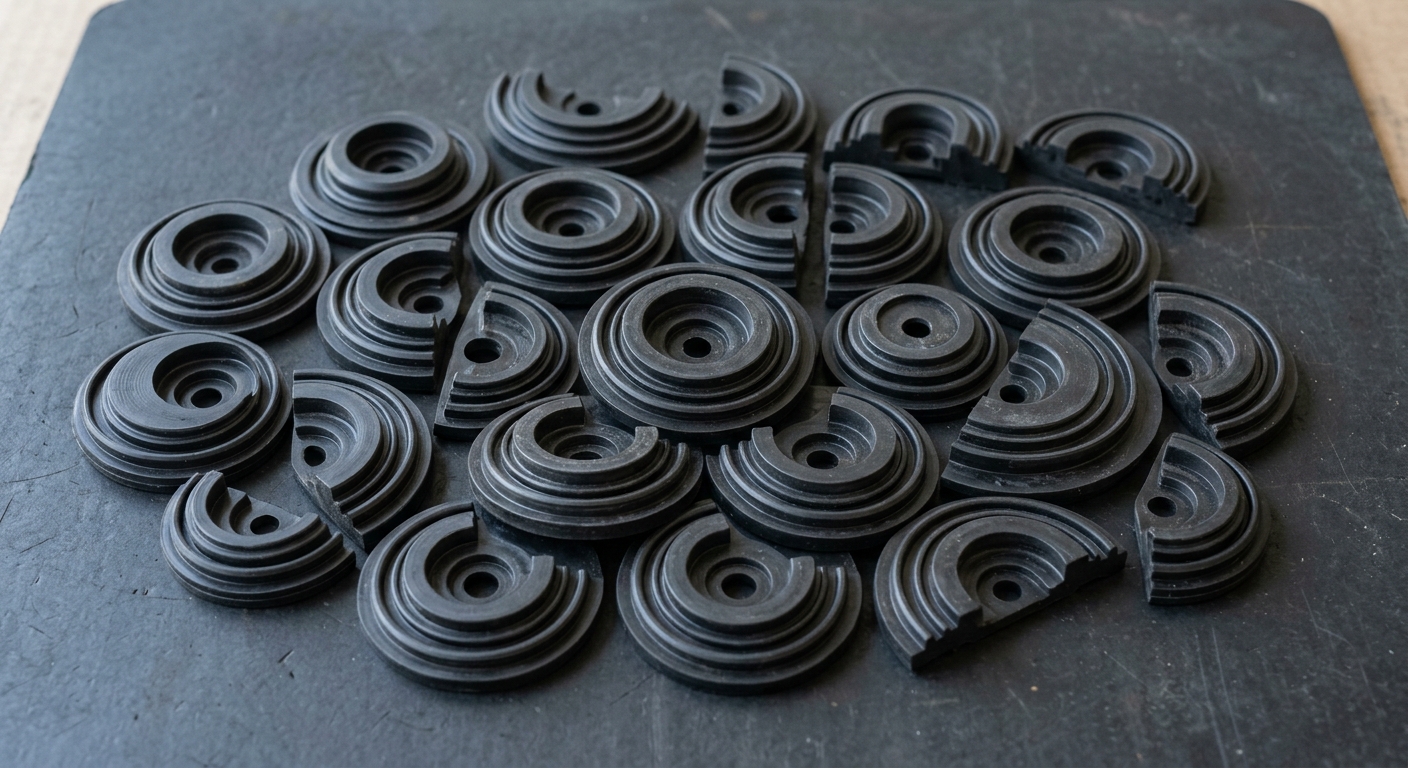
Not fundamentally — an EPDM washer is still EPDM whether it's die-cut or molded, with the same chemical resistance and temperature range. But there's a subtle difference worth knowing: die-cut washers are punched from already-cured sheet, so the cut edge is mechanically sheared and can be slightly more prone to micro-tearing under repeated flexing. Molded washers cure as a complete unit with a smooth, unbroken surface all around, which tends to hold up better in dynamic or high-vibration applications.
For common materials like NBR, silicone, FKM, and neoprene, this edge-quality difference is minor for static seals but becomes more relevant in washers subjected to repeated compression cycles — think automotive suspension bushings or vibration-dampening washers in appliance motors.
Because die-cut tolerance depends partly on incoming sheet stock, ask your supplier how they control sheet thickness variation batch to batch — that's the weak link. For molded parts, ask about cavity-to-cavity consistency in multi-cavity tools, since a worn or poorly machined cavity can quietly drift out of spec over thousands of cycles without anyone noticing until a customer complains.
A capable manufacturer should be able to show dimensional inspection data for both processes, not just claim “tight tolerance” without backup. This is a fair question to raise during supplier qualification, alongside material certification and hardness testing.
Start with three questions: What's your annual volume? Does the part need any 3D geometry beyond flat? And how tight does the tolerance really need to be — not what would be nice, but what the application actually requires? Answer those honestly and the choice usually becomes obvious.
If you're still unsure, request quotes for both processes at your actual volume. A good supplier will tell you honestly which process fits better rather than pushing whichever one they prefer to run. Explore our rubber washer and sealing product range or check our engineering capabilities to see how mold design and die-cutting are handled for different project scales.


Our engineering team reviews your specs and responds within 24 hours with material recommendations and competitive pricing.