
Hongjie manufactures rubber O-rings in its own Shenzhen factory rather than operating as a retail parts counter. The facility has more than 25 years of production experience, 3,500+ existing profile tools, and exports to 45+ countries.
An O-ring project can start with a standard catalog profile or a drawing and groove review. The right route depends on whether an existing compound and size fits the application or a custom-molded design is required.

Material selection should follow the working medium, temperature and compliance requirements—not color. Choosing between NBR, FKM and EPDM O-rings means matching each compound’s resistance profile to the actual application.
Hongjie molds compounds rated from –60°C to +325°C, but no single compound covers the entire range:

General-purpose resistance to petroleum oils, fuels and hydraulic fluids; the default for automotive and industrial sealing. See NBR Rubber O-Rings.

Water, steam, weather and ozone resistance; common in plumbing and outdoor equipment.

Wide flexible temperature range and low compression set, with FDA/NSF-compliant options for food and medical sealing. See Silicone O-Rings.

Hydrogenated nitrile with higher heat and oil resistance than standard NBR, used in automotive AC and engine positions.

Balanced weathering, abrasion and mild chemical resistance for general industrial duty.

Silicone flexibility combined with fuel and oil resistance for aerospace and automotive fluid systems.
For media-specific selection, see Chemical Resistant O-Rings, Fuel Resistant O-Rings, Oil Resistant O-Rings, or Viton O-Rings for FKM-specific chemical and fuel resistance.
For continuous service at the upper end of the compound range or exposure to aggressive chemicals, see High-Temperature FKM/FFKM O-Rings, rated up to +325°C.
Hardness values fall within Hongjie's overall 10–90 Shore A molding range; compliance options apply only where confirmed for the specific project.
| Compound | Hardness Range | Temperature Class | Key Media | Compliance |
|---|---|---|---|---|
| NBR | 40–90 Shore A | Moderate heat, cold-flexible | Petroleum oils, fuels, hydraulic fluid | Standard |
| EPDM | 40–80 Shore A | Wide, weather-stable | Water, steam, ozone/UV exposure | Standard |
| Silicone (VMQ) | 20–80 Shore A | Widest range, low-temp to high heat | Food contact, medical, general air/gas | FDA, NSF |
| HNBR | 50–90 Shore A | High heat, oil-stable | Automotive oils, refrigerants | Standard |
| Neoprene (CR) | 40–70 Shore A | Moderate, weather-resistant | Mild chemicals, general weathering | Standard |
| FVMQ | 40–80 Shore A | Wide range plus fuel/oil resistance | Fuels, oils, silicone-based fluids | Standard |
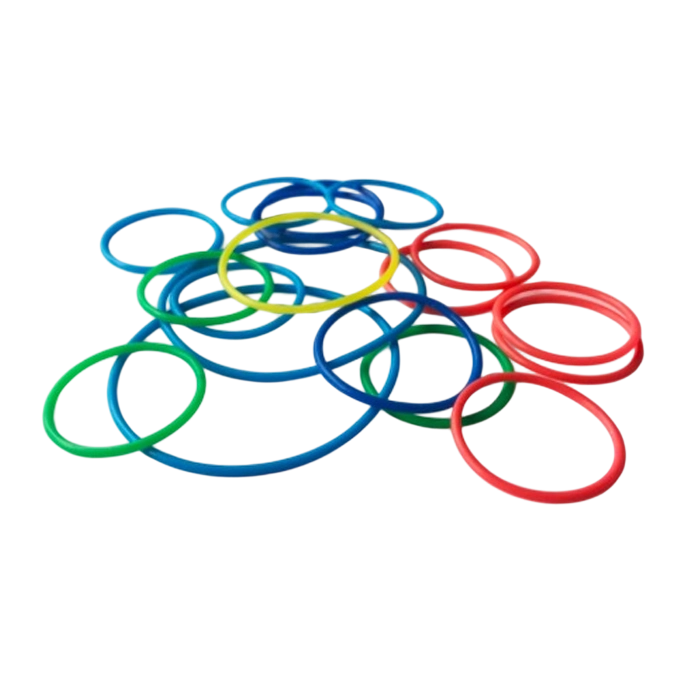
O-rings are produced to AS568A inch dash-number sizing and metric ID/cross-section sizing — see AS568 O-Rings by Dash Size & Material for standard dash-size lookup. Non-standard IDs and cross-sections are developed from a drawing, physical sample, or confirmed groove dimensions.
| Dimension Range | Standard Tolerance | Precision Tolerance |
|---|---|---|
| 0–10mm | ±0.10mm | ±0.02mm |
| 10–25mm | ±0.15mm | ±0.05mm |
| 25–50mm | ±0.20mm | ±0.08mm |
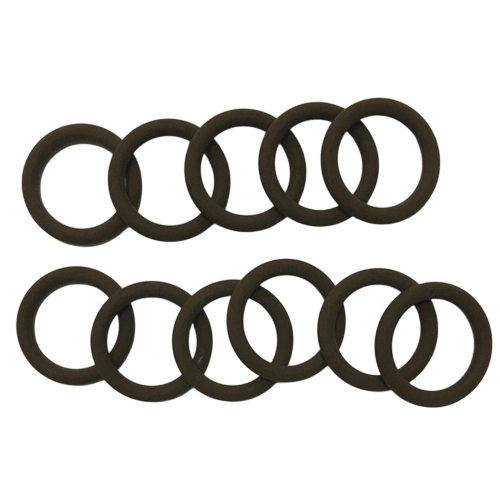
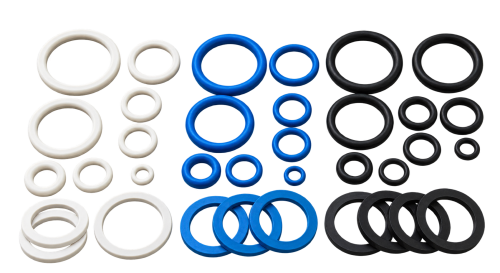
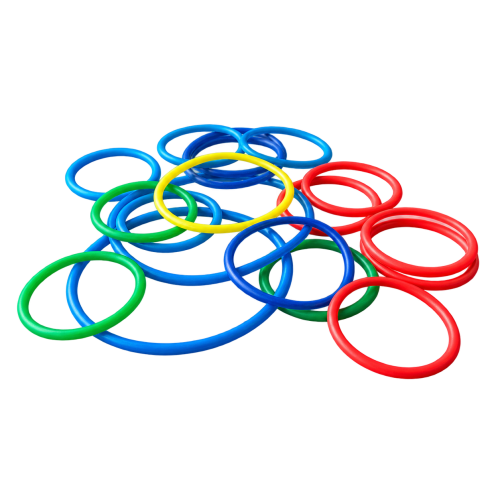
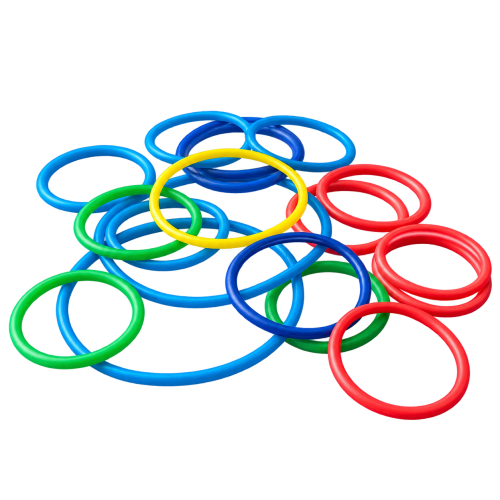
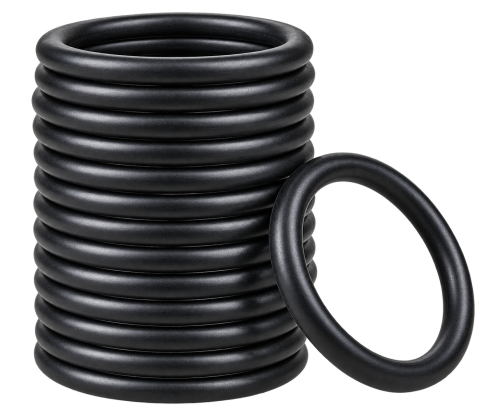
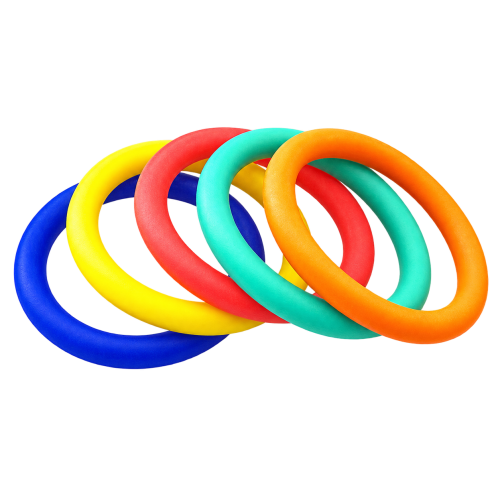
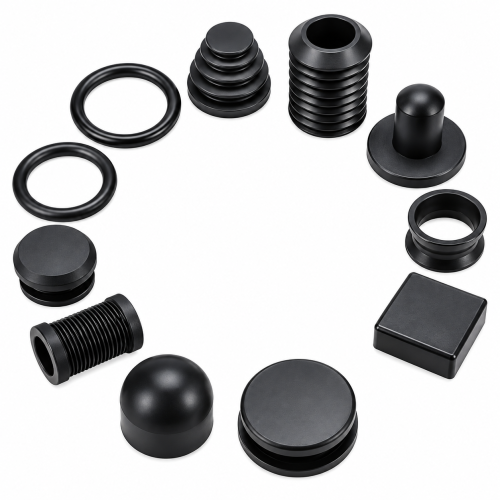
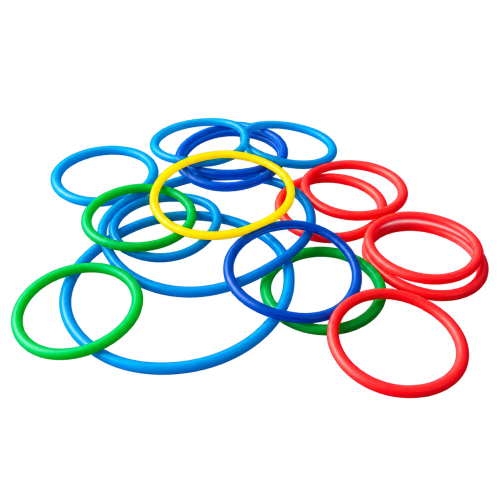
Hardness ranges from 10–90 Shore A, selected according to the compound and groove geometry. Black is the standard production color, while custom colors can identify materials, sizes or assembly positions; see custom-colored O-rings.
MOQ depends on the compound and tooling requirements and is confirmed during quote review. Functional prototypes are typically ready in 3–5 business days, while mass-production lead time is set after the compound, tooling and approved sample are finalized.

Fuel systems, HVAC, engine and transmission sealing.
Faucet, valve and fitting seals.
High-pressure cylinder and fitting sealing.
Static and rotating valve stem/body sealing.
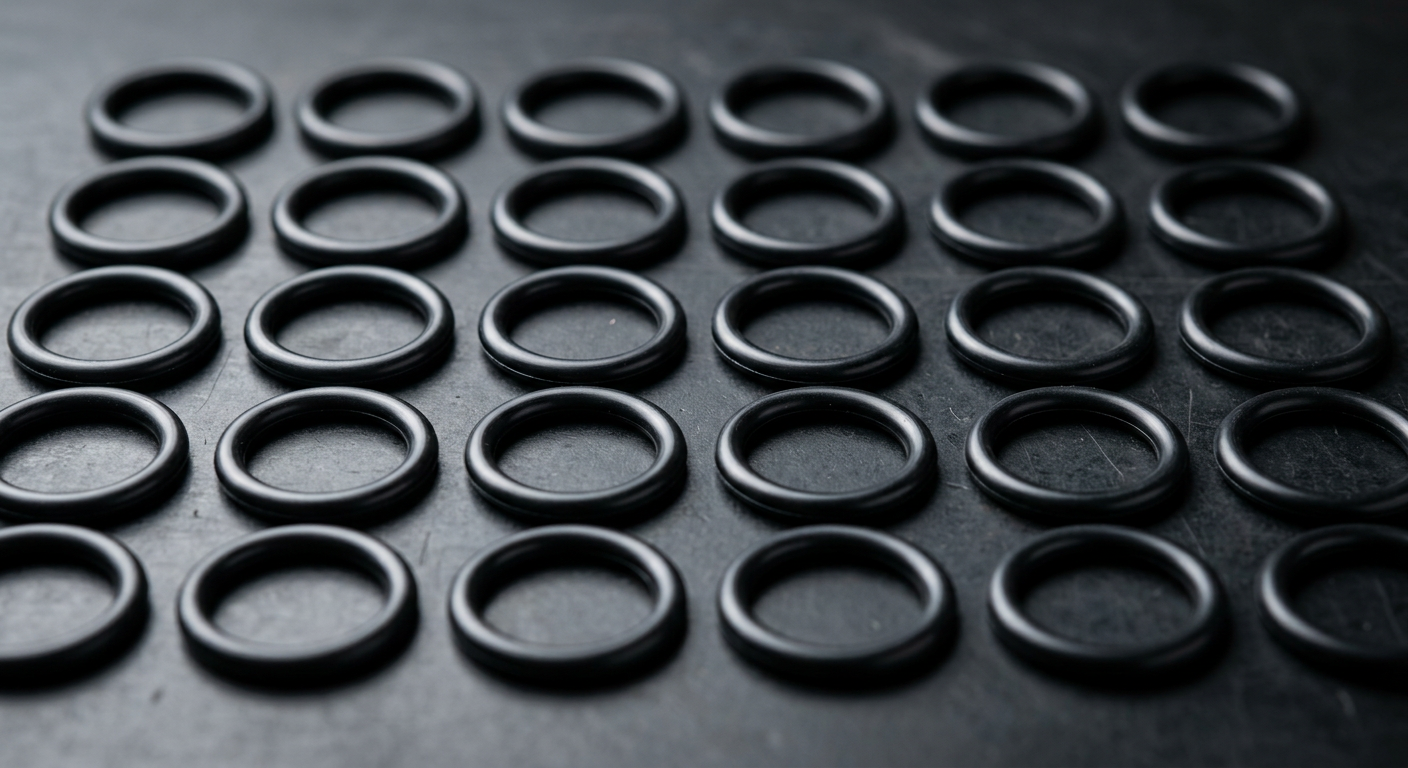
Hongjie uses injection or compression molding with either its 3,500+ existing tools or new tooling built from your drawing. Injection molding suits high-volume repeat parts, while compression molding is often better for lower-volume runs and larger cross-sections. See injection molding vs. compression molding for rubber parts.
Engineering support includes STEP/IGES CAD review, FEA-assisted seal and gland design, material consulting and functional prototypes in 3–5 business days. Squeeze, gland fill and extrusion-gap calculations help determine the correct O-ring size for a given groove; see the O-ring gland design guide.
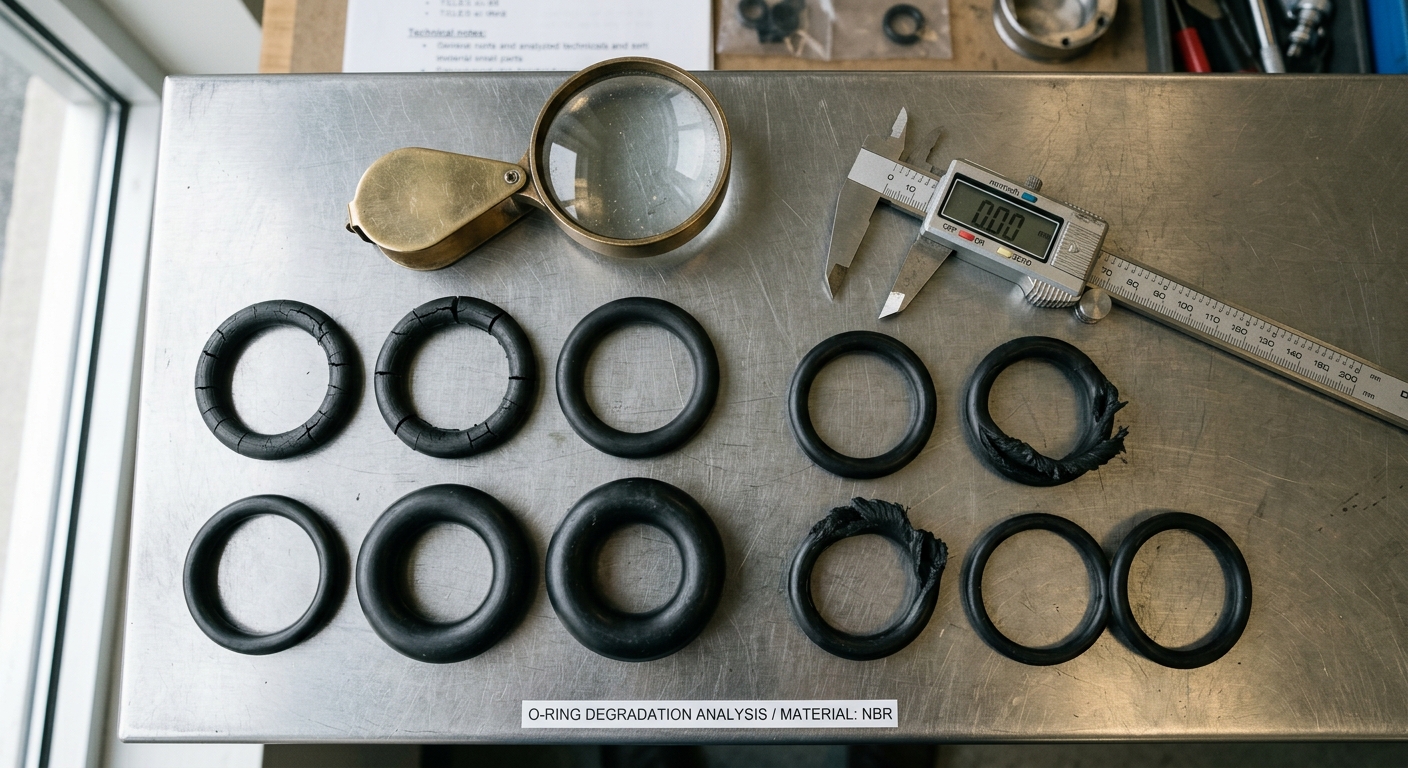
Compound compatibility is checked against 500+ fluids, gases and chemicals before material approval. Common service issues are linked to compound mismatch, groove tolerance or installation damage; rubber O-ring failure: 7 hidden root causes covers these risks in more detail.
The facility holds IATF 16949:2016 and ISO 13485:2016 certifications, with UL-certified electrical materials and FDA/NSF-compliant options for food and medical-contact applications.
Production follows Statistical Process Control and Six Sigma methods, targeting Cpk > 1.33. The 11,000 m² facility employs roughly 150 people and delivers 50M+ precision-inspected parts annually to Tier-1 suppliers in more than 45 countries.
| Program | Scope |
|---|---|
| IATF 16949:2016 | Automotive quality management systems. |
| ISO 13485:2016 | Medical device quality management systems. |
| UL certification | Electrical application safety compliance. |
| FDA/NSF compliant | Food and medical contact material options. |
| SPC / Six Sigma | Production targeting Cpk > 1.33 consistency. |

For a project that already has a compound, size and tolerance defined, submit the drawing, groove data or physical sample through Custom Rubber O-Rings from Drawings & Samples. For anything still being scoped — media, temperature, compliance, or a non-standard geometry — contact Hongjie's sealing engineers directly to start the application review.


Explore complementary sealing solutions from our comprehensive product catalog.